China Top 10 Tips How to Extend LED Strip Lifespan

Time:2026-11-18 Author:Henry
0%

LED strips can transform a kitchen, shop display, or bedroom, but their service life depends on more than the LEDs themselves. Heat trapped behind a cabinet, an overloaded power supply, or a poorly sealed connection can shorten it. This guide, “China Top 10 Tips How to Extend LED Strip Lifespan,” introduces practical steps for protecting strips in everyday installations. The details matter.

Lighting researcher Dr. Nadarajah Narendran has studied LED performance and reliability. A practical paraphrase of the thermal-management principle reflected in his research is: “Control heat to help LEDs last longer.” This is a summary, not a verbatim quotation. It points to a key habit: choose an aluminum channel where heat cannot escape easily, and avoid covering the strip with insulation or furniture. A cool touch does not prove that every component is operating safely.

The tips ahead cover compatible power supplies, correct voltage, sensible brightness settings, clean installation surfaces, and protection from moisture. They also explain why cutting only at marked points and securing connections can prevent avoidable failures. Small choices add up. Still, no checklist can promise a fixed lifespan; room temperature, operating hours, strip quality, and installation conditions all influence results. Even a careful installation may need inspection over time. Use these recommendations as practical guidance, then check the manufacturer’s specifications for your exact strip and power supply. That is the more reliable way to approach how to extend led strip lifespan.
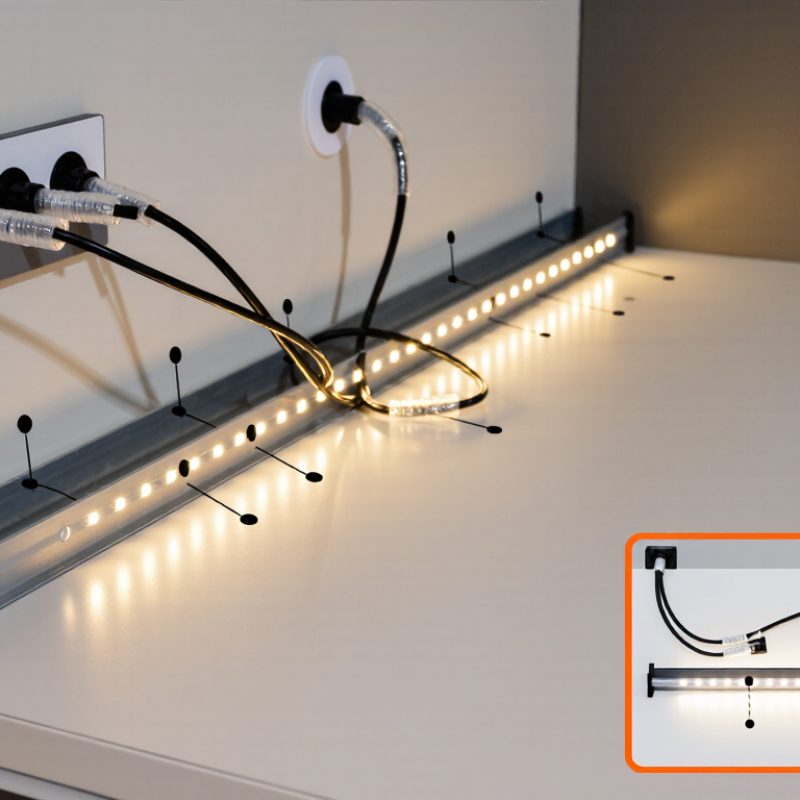
China Top 10 Tips How to Extend LED Strip Lifespan

Understanding the Factors That Affect LED Strip Lifespan

Understanding the Factors That Affect LED Strip Lifespan

An LED strip’s lifespan depends on more than its chips. Heat, electrical current, moisture, and component quality all matter. Excess heat is a common stressor: a strip pressed against an insulating surface may run hotter than one mounted on an aluminum channel. That heat can accelerate light-output decline and weaken adhesive. Keep the channel clean, allow airflow, and avoid tightly coiling powered strips. Small installation choices add up.

Check the power supply and operating conditions, too. Unstable voltage or a supply running near its limit can stress LEDs and shorten service life. In damp areas, moisture protection must match the location; a sealed coating can also trap heat. IES LM-80 test reports measure LED-package light output over periods such as 6,000 hours or longer. The related TM-21 method uses those measurements to project lumen maintenance, not to guarantee the life of an entire strip. A strip is a system. Its weakest part may be the connector, coating, or power supply. Even careful estimates can miss real-world installation problems.

Choosing Compatible LED Strips and Power Supplies

Choosing compatible LED strips and power supplies starts with matching voltage exactly. A 12-volt strip needs a regulated 12-volt DC supply; a 24-volt strip needs 24 volts. Check the strip’s wattage per metre, then multiply by its installed length. For example, a 5-metre strip rated at 10 watts per metre draws about 50 watts. A supply rated around 60 watts gives roughly 20% headroom, but the strip maker’s specifications should take priority. Small mismatch. Extra heat.

The U.S. Department of Energy’s report, LED Luminaire Lifetime: Recommendations for Testing and Reporting, explains the use of L70: the point at which light output has fallen to 70% of its initial level. That is a useful measure, not a promise that every strip will reach a particular number of hours. The Illuminating Engineering Society’s LM-80 method evaluates LED light-source lumen maintenance over time; it does not certify the whole strip-and-supply assembly. Keep the supply ventilated, avoid tight coils, and use connectors rated for the strip’s current. I have seen neat installations fail early when a supply was boxed into a warm cabinet. Matching ratings helps, but temperature and installation still matter.

Managing Heat Through Proper Installation and Ventilation

China Top 10 Tips How to Extend LED Strip Lifespan
Managing Heat Through Proper Installation and Ventilation

LED strips produce heat, even when they feel only mildly warm. Too much trapped heat can weaken the adhesive and shorten the life of the LEDs. Before installation, check the strip’s instructions for mounting surfaces and temperature limits. A clean, flat aluminum channel can help spread heat more evenly than a strip pressed directly onto painted wood or fabric. Keep the channel uncovered where possible.

Leave space around the strip and its power supply so air can move freely. Do not coil unused sections while the lights are on; tightly bundled LEDs hold heat in the center. Avoid placing strips inside sealed cabinets or behind thick insulation. If a section becomes noticeably hotter than the rest, switch it off and inspect for a poor connection or an unsuitable installation. Small details matter.

Tip: After the first hour of use, carefully check the channel and nearby surface for unusual warmth. Repeat the check after longer use. I admit this step is easy to forget once the lights look fine. A quick reminder on your phone can help you spot a heat problem before it damages the strip.

Using Safe Controls and Operating Settings

China Top 10 Tips How to Extend LED Strip Lifespan

Safe controls start with the strip’s rated voltage. Match the power supply exactly, and check its output before connecting the strip. A mismatched supply can cause excessive heat or uneven brightness. Keep connections secure; a loose joint may become warm under load. Use a dimmer designed for the strip’s power supply. Not every dimmer is compatible.

Avoid running strips at full brightness all day. Lower settings reduce electrical and thermal stress, especially in enclosed channels. Leave space around the power supply, and don’t coil excess strip while it is operating. The U.S. Department of Energy’s LED luminaire lifetime guidance stresses that heat and component conditions affect useful life.

IES LM-80 testing tracks LED package lumen maintenance for at least 6,000 hours; TM-21 uses those measurements to project maintenance, not guarantee a complete strip’s lifespan. Check temperatures after installation. A cool touch helps, but it is not a measurement. I’d still verify the supply’s load and the channel’s ventilation rather than trust appearance alone.

Cleaning, Inspecting, and Maintaining LED Strips

LED strips last longer when heat, dust, and loose connections are kept in check. Switch off the power and let the strip cool before cleaning. Wipe its surface gently with a dry, lint-free cloth; never soak it or spray cleaner onto the LEDs. Pay extra attention to dusty corners and the narrow gap around the diffuser. Restricted airflow can trap heat, so avoid covering strips with insulation or fabric.

Tips: Inspect monthly for yellowing, lifted adhesive, flickering, or dark sections. Check connectors for looseness and power supplies for unusual heat. If a section flickers, turn the system off before reseating its connector. Keep a simple note of when problems appear; I sometimes miss gradual color changes until they become obvious.

Cleaning helps, but it cannot guarantee a specific service life. The U.S. Department of Energy explains that LED lifetime depends on maintained light output and system conditions, not just whether a lamp still turns on. IES LM-80 testing measures LED-package lumen maintenance for at least 6,000 hours, while TM-21 uses test data to project performance. These figures describe tested components, not every installed strip. Check the strip maker’s technical data, and treat projections as estimates.

FAQS

What affects an LED strip’s lifespan most?

Heat, electrical current, moisture, and component quality all matter. Installation details count.

Why can an aluminum channel help?

It can move heat away from the strip. Keep it clean and allow airflow.

Can I leave a strip at full brightness all day?

You can, but lower brightness may reduce electrical and thermal stress. Especially in enclosed channels.

How should I choose a power supply?

Match its output voltage to the strip’s rated voltage. Check that it can handle the load.

What can a loose connection do?

It may become warm under load. Check that joints are secure.

Is a sealed coating always better in damp areas?

No. Protection should suit the location, but a coating can trap heat. It is a trade-off.

Do LED test results guarantee the whole strip’s lifespan?

No. Package tests measure light-output maintenance, while projections do not guarantee the life of the complete strip.

How can I check for overheating after installation?

Check the power supply and channel ventilation. Touch can offer a clue, but it is not a measurement.

Should I coil extra strip while it is powered?

Avoid it. I might be overcautious, but coiled strips can retain heat.

Conclusion

This guide explains how to extend led strip lifespan by focusing on the factors that most affect long-term performance, including heat, electrical compatibility, operating conditions, and routine care. Choosing LED strips and power supplies with matching voltage and suitable capacity helps reduce unnecessary strain. Proper installation also matters: provide adequate ventilation, avoid trapping strips in enclosed spaces without airflow, and use appropriate mounting surfaces to help dissipate heat.

Safe controls and sensible operating settings can further support reliable use. Avoid frequent harsh switching or running strips beyond their recommended limits, and use compatible dimming controls where needed. Regularly clean the strips gently to remove dust, while checking for loose connections, discoloration, or other signs of wear. These straightforward habits can help maintain consistent lighting, reduce preventable faults, and keep LED strips working effectively for longer.

Henry

Henry

Henry is a dedicated marketing professional with a profound expertise in the company's offerings. With years of experience in the industry, he possesses an impressive understanding of the market dynamics and consumer behaviors that drive success. Henry is committed to sharing his insights through......