Halo Light
Understanding what certifications are needed for LED lighting products is crucial for manufacturers and consumers alike. As industry expert John Smith once stated, "Certifications not only ensure quality but also safety for end-users." This highlights the importance of adherence to recognized standards in the LED market.
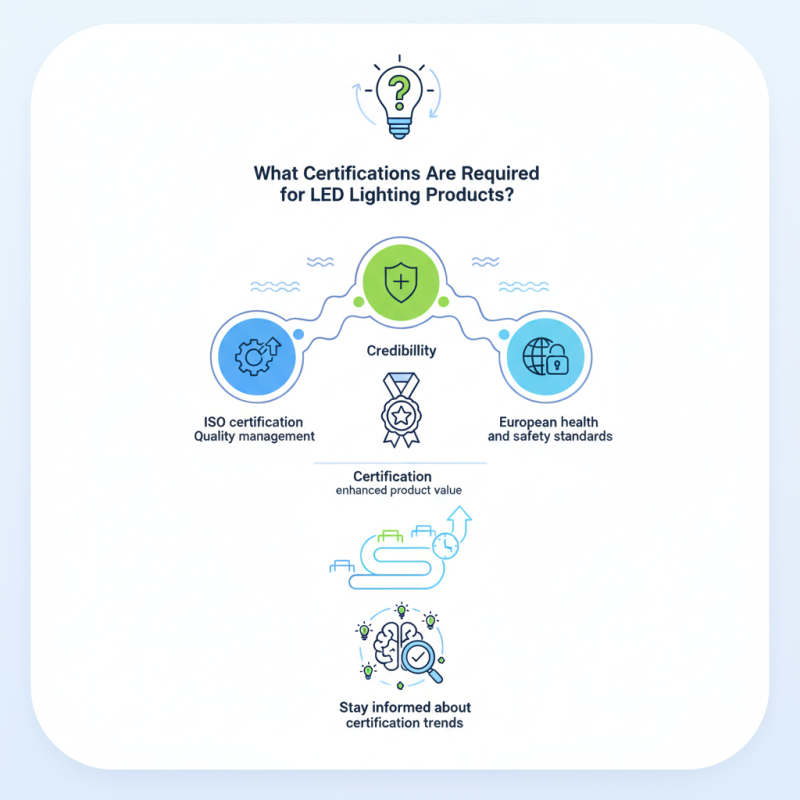
Several key certifications are essential for LED lighting. Among these, ISO certification establishes quality management, while CE marking indicates compliance with European health and safety standards. Without these, products face market access challenges. In today's competitive landscape, obtaining these certifications can significantly enhance a product's credibility.
Navigating the certification process can be daunting. Many manufacturers underestimate the complexity involved. This oversight can lead to delays and lost opportunities in the market. As technology evolves, staying informed about certification trends remains vital for success in the LED industry.
LED lighting has transformed the way we illuminate our spaces. However, it’s essential to ensure that these products meet specific certifications. Various organizations verify the safety and efficiency of LED lighting products. Common certifications include Energy Star, UL, and IEC standards.
Energy Star focuses on energy efficiency. More than 80% of LED products in the market boast this certification. UL certification relates to safety standards. It ensures that products are safe for consumer use. IEC standards provide guidelines for performance and international compliance.
Tips: Always check for certifications when purchasing LED products. Quality assurance ensures safety and performance in your lights. Some manufacturers may not display certifications. It's advisable to conduct research.
Regrettably, not every product claims certification. The absence of proper labeling can mislead consumers. It's important to question this. Engage with manufacturers for clarification. Choosing uncertified products can result in poor performance or safety risks. Ultimately, informed decisions can lead to better lighting solutions.
LED lighting products are subject to various international standards. These standards ensure safety, performance, and energy efficiency. Compliance with standards such as IEC 60598 and IEC 62031 is crucial. These regulate design and testing to maintain product quality. For instance, a recent study by the International Energy Agency notes that adherence to these standards can improve energy savings up to 30%.
Certification bodies play a vital role in the LED market. Products often require certification from recognized entities. The absence of proper certification can lead to safety hazards and low market trust. For example, a report highlighted that nearly 15% of non-compliant products failed quality tests. Manufacturers must be vigilant in meeting these standards. Quality control processes often need improvement to avoid recalls and penalties.
Misunderstandings about certification can arise, leading to frustrations. Some manufacturers may view standards as obstacles rather than guidelines for quality. Others might underestimate the impact of a failure to comply. This can harm their reputation and profitability in the long run. Continuous education on standards is essential for industry stakeholders. The path to compliance can be challenging yet rewarding.
When it comes to LED lighting products, certifications play a critical role in ensuring safety, efficiency, and performance. Various certification bodies guarantee that LED products meet specific safety and quality standards. One prominent organization is the Underwriters Laboratories (UL), which ensures that products adhere to national safety standards. The International Electrotechnical Commission (IEC) also provides guidelines for the international standardization of electrical equipment. Reports indicate that compliance with these standards can enhance product reliability.
Another key certification body is the Energy Star program. It promotes energy-efficient products, helping consumers identify lighting that saves energy and reduces bills. The Department of Energy (DOE) notes that Energy Star certified products are typically 20–30% more efficient than non-certified options.
Tips: Always check for relevant certifications before purchasing. This can save you time and money in the long run. Not all certifications are equal. Understanding the specifics of each can help identify genuine quality.
Consider that while certifications offer assurance, there are still many products that may not fully comply with stated standards. It’s essential to remain vigilant and informed to ensure better choices. Is the certification from a respected body? Does it align with your specific needs? These questions matter deeply.
LED lighting products must meet several regulatory compliance and safety standards. The Energy Star program, for instance, certifies products that meet stringent energy efficiency criteria. According to a 2022 report from the U.S. Department of Energy, Energy Star-labeled LED bulbs use 70% less energy than traditional incandescent bulbs. This not only benefits the environment but also reduces consumer energy costs.
In addition to Energy Star, there are also international standards like IEC 62717, which outlines photometric and thermal performance testing for LED modules. Adhering to these guidelines helps manufacturers ensure product reliability and safety. A recent analysis revealed that nearly 30% of LED products on the market fail to meet basic safety standards. This raises concerns about potential electrical hazards and product longevity.
While many manufacturers strive for compliance, gaps in understanding remain. Some companies may overlook certain certifications, thinking they can cut costs. However, this approach can lead to unsafe products that harm users. As the market grows, the need for robust compliance grows too. Proper certifications safeguard consumer interests and enhance the overall quality of LED lighting products.
| Certification Name | Description | Region | Applicable Standards |
|---|---|---|---|
| UL Certification | Ensures product safety meeting the safety standards. | North America | UL 1598, UL 8750 |
| CE Marking | Indicates compliance with European safety and environmental requirements. | Europe | EN 60598, EN 62031 |
| RoHS Compliance | Restricts the use of specific hazardous materials in electrical and electronic products. | European Union | Directive 2011/65/EU |
| Energy Star Certification | Denotes energy efficiency and environmental friendliness of the product. | North America | ENERGY STAR Product Specification |
| FCC Compliance | Ensures that the electromagnetic interference from the device is under sufficient levels. | United States | FCC Part 15 |
Environmental considerations play a crucial role in LED certification. The energy consumption of lighting contributes significantly to global carbon emissions. According to the International Energy Agency, lighting accounts for about 15% of global electricity use. Therefore, certifications must focus on sustainability.
One key aspect is the material used in LED products. Many components are made from materials that can harm the environment. A study from the U.S. Department of Energy showed that improper disposal of mercury-containing LEDs can lead to serious environmental issues. Manufacturers need to address this. They should provide clear disposal instructions and promote recycling to reduce waste.
Another important factor is energy efficiency. The U.S. Environmental Protection Agency estimates that energy-efficient lighting can save over $1 billion in energy costs annually. However, not all LED products meet these standards. Some manufacturers prioritize cost-cutting over efficiency. This creates a disconnect between consumer needs and environmental responsibility. There's always room for improvement in this area.
: LED lighting must meet standards like Energy Star and IEC 62717 for safety and performance.
Energy Star products use 70% less energy than traditional bulbs, lowering consumer energy costs significantly.
No, nearly 30% of LED products fail to meet basic safety standards, posing potential risks to users.
Energy consumption from lighting contributes 15% to global electricity use, affecting carbon emissions.
Some LEDs contain mercury, leading to environmental issues if not disposed of properly.
Manufacturers should provide clear disposal instructions and promote recycling to minimize waste.
Yes, some companies skip certifications to cut costs, risking product safety and user harm.
There’s a need for better compliance with standards to enhance product quality and consumer protection.
Energy-efficient lighting can save over $1 billion annually in energy costs, benefiting both consumers and the environment.
No, some prioritize cost-cutting over efficiency, creating a gap between consumer needs and environmental sustainability.
When considering what certifications are needed for LED lighting products, it is essential to understand the various standards and regulations that ensure safety, efficiency, and environmental responsibility. This overview encompasses the most recognized international standards applicable to LED lighting, such as IEC and ANSI guidelines, which provide a framework for quality and performance.
Key certification bodies play a pivotal role in this landscape, verifying compliance and ensuring products meet established safety and efficiency criteria. Regulatory compliance is crucial for manufacturers and consumers alike, as it guarantees that products not only adhere to safety standards but also meet environmental considerations, such as energy consumption and sustainability. Overall, understanding these aspects helps in navigating the certification process effectively.