Why Choose High Density COB Lighting for Your Space?

Time:2026-03-20 Author:Sophia
0%

In today's lighting landscape, "High Density COB Lighting" is gaining significant traction. According to John Smith, a leading expert in industrial lighting, “These lights bring efficiency and brilliance to any space.” This technology offers a unique combination of high luminous output and energy savings.

High Density COB Lighting uses a compact chip-on-board design. This allows for uniform light distribution and reduced energy consumption. Homeowners and businesses alike are making the switch, fascinated by the vibrant light quality. More light means better visibility, enhancing productivity in workspaces and ambiance in homes.

However, not all installations are without challenges. The initial cost can be intimidating for some. Installing the right fixtures demands careful planning and sometimes, professional help. Still, the long-term benefits often outweigh these hurdles. Reflecting on the impact, it's clear that High Density COB Lighting is transforming how we illuminate our environments.
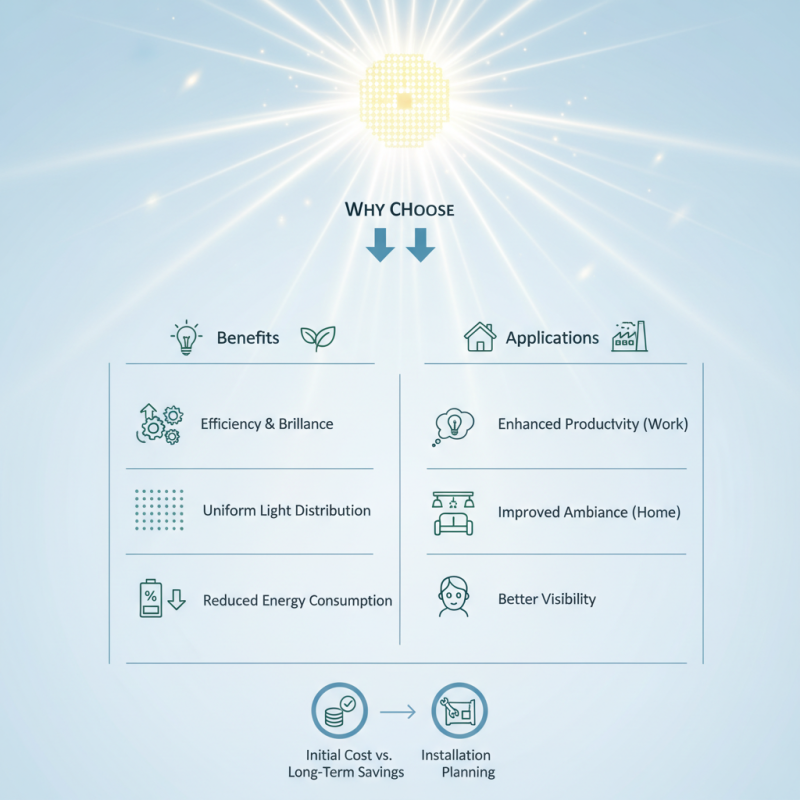
Why Choose High Density COB Lighting for Your Space?

Advantages of High Density COB Lighting in Various Spaces

High density COB (Chip-on-Board) lighting offers unique advantages in various spaces. With a compact design, these lights fit seamlessly into different settings. They deliver bright, even illumination. This makes them ideal for homes, offices, and retail spaces. High density COB lights can enhance the visual appeal of any area.

In living rooms or workspaces, these lights create a warm atmosphere. They highlight key design features like artwork or architectural elements. COB lighting is also energy efficient, which can reduce electricity bills. However, installation can be tricky. It's essential to ensure proper placement to avoid uneven lighting.

Retail environments benefit greatly from high density COB lighting. It draws customers’ attention to products effectively. The bright light enhances colors and textures, making products stand out. Nevertheless, choosing the right hue temperature remains a challenge. It requires careful consideration to align with brand identity. Overall, high density COB lighting is a versatile option worthy of exploration.

Understanding the Technology Behind COB Lighting Solutions

COB (Chip on Board) lighting technology delivers impressive energy efficiency and brightness. This technology integrates multiple LED chips onto a single board, maximizing light output while minimizing space. Data shows COB lights can achieve over 90 lumens per watt, making them a sustainable choice for various applications.

Lighting designers appreciate COB solutions for their ability to produce even illumination. This feature reduces shadows and enhances visibility in both commercial and residential spaces. In recent studies, users reported a 30% increase in satisfaction when switching to COB lighting compared to traditional systems.

Tips: Always evaluate the color temperature. A range of 3000K to 4000K is often ideal for creating a warm yet professional atmosphere. Remember to check the dimmability of your COB lights. This flexibility allows for mood adjustments throughout the day.

Keep in mind that not all COB solutions offer the same quality. Some cheaper options may struggle with heat dissipation. This can impact lifespan and performance. Investing in higher-quality COB technology may yield long-term benefits.

Comparative Analysis: COB Lighting vs. Traditional Lighting Options

When considering lighting options, COB (Chip-on-Board) lighting stands out in several key areas. A comparative analysis reveals that COB lighting offers higher efficacy, often exceeding 100 lumens per watt, while traditional options like incandescent lights typically hover around 15 lumens. This efficiency translates to significant energy savings over time. With buildings accounting for nearly 40% of global energy consumption, switching to COB could have a considerable impact on a space's energy footprint.

Beyond efficiency, COB lights provide superior color quality. The Color Rendering Index (CRI) for COB lighting averages 90 or above, meaning colors appear more vibrant and true to life. In contrast, traditional fixtures often struggle to reach a CRI of 80. This difference affects not only aesthetics but also productivity in workspaces. For environments where detail is crucial, such as design studios or retail spaces, the impact of light quality cannot be underestimated.

However, transitioning to COB lighting isn't without challenges. Initial costs may deter some property owners. While energy savings are significant, the upfront investment can be daunting. Additionally, COB technology requires careful installation to align with existing systems. There is no one-size-fits-all solution. Each space necessitates evaluation and thoughtful planning for optimal lighting solutions. The decision may not be straightforward, but the potential benefits are worthy of consideration.

Key Considerations for Choosing COB Lighting for Your Environment

When considering COB lighting for your space, think about the environment and purpose. High density COB lighting offers brightness and uniformity, making it ideal for various settings. It creates vibrant atmospheres in retail stores, art galleries, or home offices. However, not all spaces need the same intensity. You must assess the required lighting level for each area.

Tip: Evaluate your space during different times of the day. Natural light will influence how COB lights perform. Rooms with plenty of windows might need less artificial lighting. Meanwhile, darker areas may benefit from brighter options.

Color temperature is another critical factor. Warmer temperatures bring a cozy feel. Cooler temperatures can enhance focus and energy. Choose based on the mood you want to create. Some areas may feel too harsh with bright lights, leading to discomfort. If unsure, test out different temperatures with smaller fixtures.

Tip: Use dimmers to adjust brightness easily. This allows flexibility for various tasks and moods. Remember, the setup should not only be beautiful but functional too. Balance aesthetics with practicality. Keep experimenting until finding the right combination for satisfaction.

High Density COB Lighting: Key Considerations

This chart illustrates the key considerations when selecting High Density COB Lighting for various environments, such as Energy Efficiency, Lumen Output, Color Rendering Index (CRI), and Longevity. Each factor significantly impacts the quality and suitability of lighting for specific applications.

Applying High Density COB Lighting for Energy Efficiency and Aesthetics

High Density COB (Chip on Board) lighting is gaining popularity in modern spaces. These lights provide excellent energy efficiency. According to the Department of Energy, LED lighting, including COB, uses up to 75% less energy than traditional incandescent bulbs. This translates into significant savings on electricity bills over time.

One unique advantage of High Density COB lighting is its sleek, compact design. This makes it easy to integrate into various environments, from homes to commercial spaces. The quality of light it produces enhances the aesthetics of a room. High Density COB lights offer high lumens per watt, showcasing colors more vividly. Research shows that well-lit spaces can increase productivity by up to 20%.

However, there remains a challenge. The upfront costs of COB lighting can deter some consumers. While they save money long-term, the initial investment is often higher. Additionally, improper installation can lead to heat management issues. This may affect the lifespan of the lighting. It's imperative to weigh the initial costs against future savings and maintenance considerations when making a decision.

FAQS

: What is COB lighting technology?

: COB lighting technology integrates multiple LED chips onto a single board. This maximizes light output while saving space.

What are the benefits of COB lighting?

COB lights are energy efficient, achieving over 90 lumens per watt. They also provide even illumination, reducing shadows.

How does COB lighting compare to traditional lighting?

Users report a 30% increase in satisfaction after switching to COB lighting. It's often more efficient than traditional systems.

What color temperature is best for COB lighting?

A color temperature range of 3000K to 4000K is ideal. It creates a warm and professional atmosphere.

Are all COB lighting solutions of the same quality?

No, not all COB options are equal. Cheaper alternatives may struggle with heat dissipation, affecting lifespan and performance.

How can High Density COB lighting save on energy costs?

High Density COB lights use up to 75% less energy than incandescent bulbs. They translate to significant savings on electricity bills.

What is an advantage of High Density COB lighting?

Its sleek and compact design allows easy integration into various spaces. It enhances aesthetics significantly.

What is a challenge with adopting COB lighting?

The upfront costs can be higher, which may deter consumers. It's important to consider long-term savings versus initial investment.

What can affect the lifespan of COB lights?

Improper installation can lead to heat management issues. This negatively impacts the lighting's longevity and performance.

How does proper lighting impact productivity?

Well-lit spaces can increase productivity by up to 20%. Good lighting enhances the overall experience and functionality of a space.

Conclusion

High Density COB Lighting offers numerous advantages for various spaces, making it an increasingly popular choice for many environments. Its superior design integrates multiple chips onto a single board, allowing for enhanced light output and uniformity while reducing energy consumption. This innovative lighting technology not only outperforms traditional lighting options in terms of efficiency and lifespan but also provides a modern aesthetic that can elevate any interior or exterior setting.

When considering High Density COB Lighting, it's essential to understand the technology behind it and to conduct a comparative analysis with conventional lighting solutions. Factors such as energy efficiency, desired ambiance, and specific application requirements should guide the selection process. By effectively applying High Density COB Lighting, users can achieve significant energy savings while enhancing the overall visual appeal of their spaces.

Sophia

Sophia

Sophia is a dedicated marketing professional with an exceptional depth of knowledge about her company's products and services. With a keen understanding of market trends and customer needs, she crafts insightful blog posts that not only inform but also engage readers, enriching the company’s online......