Halo Light
LED strip lights have revolutionized the way we illuminate our spaces. With a projected market growth rate of over 20% annually, these flexible lights are increasingly popular. Understanding how to choose the right LED strip lights can greatly impact both aesthetics and functionality in residential and commercial settings.
Consider the specific needs of your space. Factors like brightness, color temperature, and length are crucial in making the right decision. A report by the U.S. Department of Energy highlights that LED lights are 75% more efficient than traditional incandescent bulbs. This efficiency translates to energy savings and longer lifespan, making them a wise investment.
However, selecting the wrong specifications can lead to dissatisfaction. For instance, opting for a color temperature that does not match your room's design can create an undesirable ambiance. It's essential to evaluate not just the technical aspects, but also how these lights will enhance your overall environment. Understanding these nuances can be challenging but is necessary for achieving optimal results.
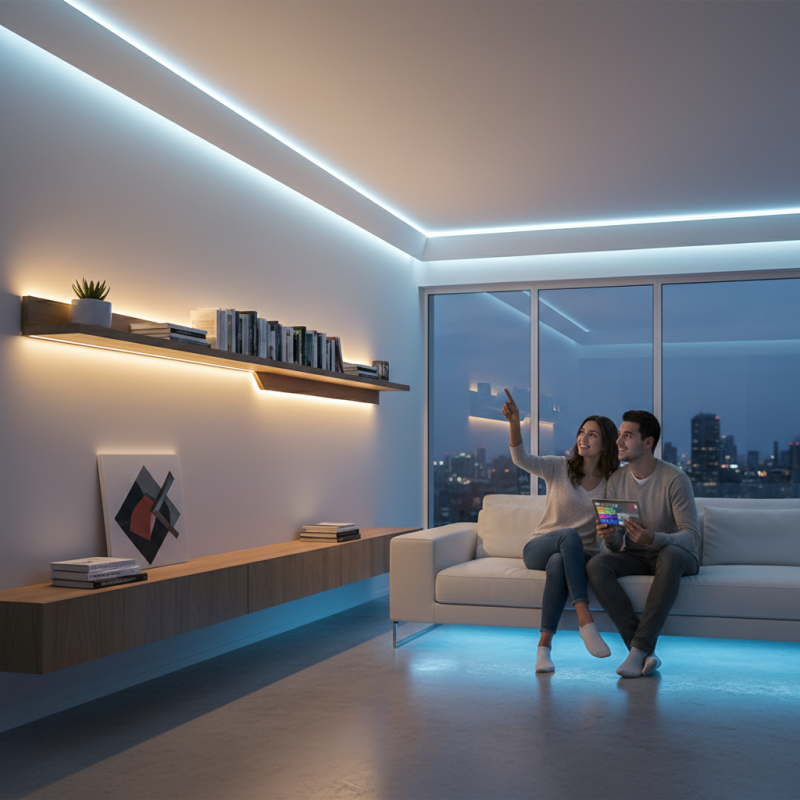
When selecting LED strip lights, it's crucial to understand the different types available. There are various categories, including rigid and flexible strips. Rigid strips are great for direct lighting applications, while flexible options offer versatility for curved surfaces. Consider where you will use the lights. A flexible strip may be ideal for accent lighting in tight spaces.
Another important distinction is the LED density. Strips come in different densities and brightness levels. Higher-density strips emit brighter light. They are perfect for task lighting in work areas. Lower-density options are better for ambiance, creating a softer glow. This choice ultimately depends on the desired atmosphere and functionality.
It's worth noting that not all strips are waterproof. If you plan to use them outdoors or in damp areas, look for waterproof ratings. Also, the color temperature is vital. Choose warm white for a cozy feel or cool white for a modern aesthetic. Consider where each type works best. This reflective approach can lead to better decision-making.
When considering LED strip lights, assessing your lighting needs is crucial. Start by determining the purpose of the lighting. Are you aiming for ambiance, task lighting, or accent work? Each goal requires different brightness levels and color temperatures. For example, soft white or warm tones create a cozy atmosphere, while bright, cool colors are ideal for workspaces.
Next, think about the location. Will the strips be used indoors or outdoors? Indoor strips require careful placement to avoid harsh shadows. Outdoor strips need to be weather-resistant to withstand elements. Reflect on the space dimensions too. Measure lengths accurately to avoid purchasing excessive or inadequate lengths. It's essential to choose a length that matches your design vision while providing even lighting distribution.
Lastly, consider power source options. Some LED strips require adapters, while others can be plugged directly into USB ports. Assess existing power outlets and location for optimal setup. It's not uncommon to overlook these practical aspects, leading to frustration later. Mapping out your needs thoroughly can reveal specific lighting goals and preferences. This reflection aids in selecting the right LED strip lights.
When choosing LED strip lights, several key features warrant careful consideration. Brightness is measured in lumens. A typical LED strip can produce between 300 to 1000 lumens per meter. For ambient lighting, 300-500 lumens are usually sufficient. However, if you need task lighting, aim for 700-1000 lumens for better visibility without straining your eyes. Overlooking this factor could result in a dimly lit space that lacks functionality.
Color temperature, measured in K, also affects mood and ambiance. Options range from warm white (about 2700K) to cool blue (around 6000K). Research indicates that warm light promotes relaxation, while a cooler tone can enhance concentration. Your chosen environment will dictate which temperature is appropriate. Some users might experiment with different hues and find their preferences evolve over time.
Lastly, consider the length of the strip. Standard options range from 5 to 16 feet. Installing a length that is too short can lead to gaps in lighting. Conversely, an excessively long strip can be difficult to manage and may require excessive trimming. Recognizing the right fit is crucial, not just for aesthetics, but also for ensuring optimal illumination. If you miss this detail, it could diminish the overall impact of your lighting design.
When installing LED strip lights, there are several factors to consider. Power requirements play a crucial role in ensuring that your lights function correctly. The voltage of the LED strips often determines how much power they need. Most strips operate at either 12V or 24V, which impacts the length and brightness of the installation. Always check if your power supply matches the voltage needed for your strips.
Another aspect often overlooked is the installation method. Many opt for adhesive backing, but this can fail over time. Instead, using mounting clips or channels can offer better support. This approach might involve extra steps, but it helps in maintaining a clean look. Also, consider the environment where the strips will be used. Damp areas may require moisture-proof versions for safety and durability.
Finally, think about the power supply's wattage capacity. An underpowered supply can lead to dim lighting or flickering. Carefully calculate the total wattage your strips will need. It's easy to underestimate this, especially with longer runs. Take time to measure accurately and adjust as needed. Small miscalculations can lead to frustration and wasted materials.
When selecting LED strip lights, cost and energy efficiency are critical factors. The initial price may seem tempting. However, long-term savings matter more. LED strip lights are known for their energy-efficient design, consuming less electricity. This lowers your utility bills significantly over time.
You should consider the lumens per watt. Higher lumens indicate brighter lights. More lumens mean you need fewer strips to achieve your desired brightness. Always compare the wattage of different lights. Some may look cheaper upfront, but they might use more power, leading to higher costs over time.
Tips: Look for LED strips with a lifespan of at least 25,000 hours. This ensures durability and reduces replacement costs. Check for efficiency ratings from reliable sources to make informed purchases. Not all lights are created equal. It's essential to weigh upfront costs against energy savings. Balancing these aspects will help you choose wisely and reflect on your energy use habits.
: LED strips can be rigid or flexible. Rigid strips suit direct lighting. Flexible strips fit curved surfaces well.
Higher-density strips emit brighter light. They’re great for task lighting. Lower-density options provide a softer glow.
No, not all strips are waterproof. If used outdoors, check the ratings carefully to avoid damage.
Color temperature matters for mood. Warm white creates coziness, while cool white offers a modern feel.
Identify the purpose first. Is it for ambiance, task lighting, or accent work? This affects brightness and color choice.
Indoor and outdoor locations require different considerations. Measure the space accurately to avoid buying too much or too little.
Some strips need adapters, while others plug into USB ports. Check current outlet availability for the best fit.
Brightness is measured in lumens. For ambient lighting, 300-500 lumens are enough; for tasks, 700-1000 lumens work best.
Strip lengths range from 5 to 16 feet. A too-short strip causes gaps, while a long one can complicate installation.
Missing key features can lead to dissatisfaction. Dim lighting or wrong colors might not create the desired atmosphere.
When considering how to choose the right LED strip lights, it's essential to understand the various types available and assess your specific lighting needs and goals. Different LED strip lights offer a range of capabilities, so identifying the purpose—whether for ambiance, task lighting, or decorative use—can guide your selection.
Key features such as brightness, color temperature, and length should be evaluated to ensure that the lights will fulfill your requirements. Additionally, exploring installation options and power requirements is crucial for a seamless setup. Finally, comparing the cost and energy efficiency of different LED strip lights will help you make a well-informed decision that balances quality and budget.