 Halo Light
LED lighting is widely used across homes, offices, factories, and commercial spaces in China. Yet a bright sample in a showroom does not always perform the same way after installation. Buyers and project teams often ask, “what are common led lighting problems,” especially when comparing unfamiliar suppliers or troubleshooting a new system. The answer depends on the product, its components, and how it is installed.
Flickering, uneven brightness, inconsistent color temperature, and early driver failure are issues worth checking. Some lamps may also run hotter than expected, particularly when fixtures have limited ventilation. Compatibility can be another concern: an LED lamp may not dim smoothly with an older dimmer, even when both products appear suitable on paper. Small details matter. A loose connector or poor heat path can affect performance over time.
Not every problem points to poor manufacturing. Incorrect specifications, unsuitable controls, shipping damage, or installation conditions may also contribute. Product samples, clear datasheets, and checks under realistic operating conditions can help buyers assess risk. Ask for details about the driver, rated input range, dimming method, and warranty terms; verify claims rather than relying on appearance alone. I have seen how easy it is to blame the lamp too quickly. That assumption can be wrong. A careful review of the full setup gives a more reliable starting point for choosing LED lighting and resolving faults.
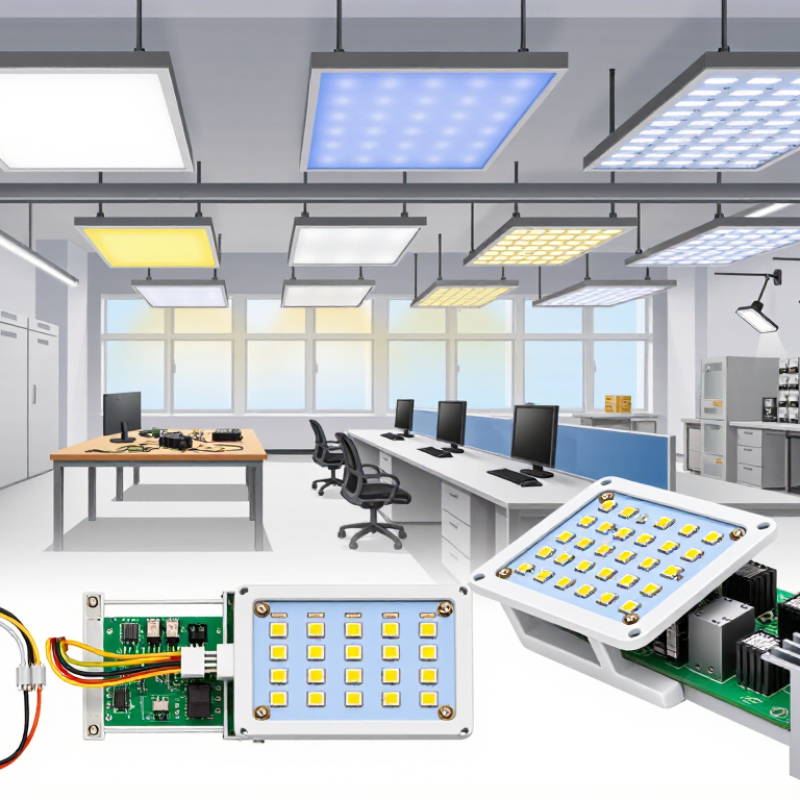
Common LED lighting problems found in China often include flicker, uneven color, early failure, and inconsistent brightness. These issues can occur in products from different suppliers; they do not describe every factory or shipment. A lamp may look steady in a showroom, then flicker after hours of use because its driver overheats. Some batches also show visible differences in color temperature. Small details matter.
The LED chip is not the only factor. Driver quality, solder joints, heat-sink design, and installation conditions all affect performance. Poor heat transfer can leave a fixture unusually hot, while loose connections may cause intermittent light. Voltage conditions and dimmer compatibility can add complications. I would not treat one sample as proof; that is an easy mistake. Compare several units from the same batch.
Tips: Request test reports for flicker, temperature, and electrical safety. Check multiple units, not just a polished sample. Run them in the intended fixture and note brightness or color changes. A phone camera may suggest flicker, but it cannot confirm it. Use a qualified technician for measurements, and keep batch codes and test records.
| Problem | Common Symptoms | Possible Causes | Practical Checks and Remedies |
|---|---|---|---|
| Flickering or intermittent light | Visible flicker, pulsing, or momentary outages, sometimes more noticeable when dimmed. | Incompatible dimmer and LED driver; loose wiring; unstable supply; or a driver that is failing. | Check connections with the circuit safely isolated. Confirm dimmer compatibility and driver specifications; have a qualified electrician investigate persistent supply fluctuations. |
| Early failure or shortened service life | Lights fail sooner than expected, or brightness declines noticeably over time. | Excess heat, poor heat dissipation, unsuitable driver components, frequent switching, or operation outside the product's rated conditions. | Check ventilation, ambient temperature, fixture compatibility, and rated operating conditions. Replace damaged equipment with products carrying applicable safety and performance documentation. |
| Excessive heat | The lamp or fixture feels unusually hot, or nearby materials show heat damage. | Enclosed fixtures, blocked ventilation, high ambient temperatures, incorrect wattage, or a poorly matched driver. | Turn off the circuit and allow the fixture to cool. Check the product's instructions for enclosed-fixture use and maintain adequate clearance and ventilation. |
| Uneven brightness or color variation | Different lamps appear to have different brightness levels or shades of white in the same area. | Variation in LED bins, color temperature, driver output, product age, or supply conditions. | Use consistent product specifications and color-temperature ratings for a single installation. Replace mismatched lamps as a group when uniform appearance is important. |
| Glare or uncomfortable light | Harsh brightness, reflections, eye discomfort, or poor visual comfort. | Exposed LED points, unsuitable beam angle, excessive output, or poor placement for the task. | Choose suitable optics and shielding, adjust fixture placement, and use appropriate light levels for the room and activity. |
| Moisture-related damage | Corrosion, condensation, intermittent operation, or failure in bathrooms, kitchens, outdoor areas, and other damp locations. | Ingress of moisture or dust due to an unsuitable enclosure, damaged seals, or incorrect installation. | Use a fixture with an ingress-protection rating appropriate to its location. Inspect seals and cable entries; do not use indoor-rated equipment outdoors or in wet areas. |
| Surge or voltage-related damage | Sudden failure, repeated driver damage, or outages following electrical disturbances. | Transient voltage surges, wiring faults, or supply conditions beyond the equipment's rated input range. | Verify the supply and installation with a qualified electrician. Consider suitable surge protection where the electrical design and local requirements call for it. |
| Buzzing or humming | A noticeable sound from the lamp, driver, dimmer, or fixture, often changing with dimming. | Driver or dimmer incompatibility, loose components, or electrical components operating under unsuitable conditions. | Check dimmer compatibility and secure mounting. If noise persists or is accompanied by heat, flicker, or a burning smell, switch off the circuit and arrange a professional inspection. |
| Color shift or poor color rendering | Light appears warmer, cooler, or less natural than expected; colors look muted or inconsistent. | Different color-temperature or color-rendering specifications, LED aging, heat stress, or product variation. | Compare the product's stated color temperature and color-rendering information before installation. Keep replacement lamps consistent with the existing lighting specification. |
| Installation or wiring issues | A light does not turn on, trips a protective device, or operates intermittently after installation. | Incorrect wiring, loose terminals, incompatible controls, or an unsuitable fixture or driver. | Isolate power before inspection. Follow the product wiring diagram and applicable electrical rules; use a qualified electrician for mains-voltage work. |
Note: These issues can occur in LED installations in China and elsewhere. Actual causes depend on the product, installation, environment, and local electrical conditions. Mains-voltage inspection and repair should be handled by a qualified electrician.
An incompatible driver, dimmer mismatch, loose connection, or unstable input voltage can cause flicker. Small clues matter.
Note when flickering or shutdown occurs: after switching, during dimming, or when several lights run together. Check the driver’s rated voltage and load.
Heat trapped inside a sealed fitting can raise the LED’s operating temperature and speed up light-output loss. Dust and tight insulation can worsen it.
No. A housing-temperature reading is only a warning sign, not the chip temperature. It is easy to mistake one for the other.
Match rated voltage, light output, color temperature, and dimming method to the installation. A bright showroom sample tells little about long-term performance.
Request current safety and electromagnetic compatibility test documents. Confirm they cover the exact model and configuration.
Verify that the stated protection rating suits the exposure. A label alone does not prove the fixture is installed correctly.
Test a small quantity in the intended fixture. After steady operation, check flicker, temperature, and color variation. I might still miss something.
This article explains what are common led lighting problems in China, including flickering, uneven or reduced brightness, color changes, and lights that fail earlier than expected. These issues can result from inconsistent power supply, incompatible drivers, poor connections, unsuitable components, or inadequate heat management. Because LEDs generate heat around their electronic parts, insufficient ventilation or weak thermal design can gradually reduce performance and shorten service life.
The article also outlines practical ways to diagnose faults, such as checking wiring and connections, observing when flickering occurs, and inspecting the power supply and heat dissipation. Depending on the cause, solutions may include correcting a loose connection, replacing a faulty driver, improving ventilation, or choosing a suitable replacement fixture. Careful product selection, clear specifications, appropriate electrical ratings, and reliable quality checks can help reduce recurring problems and support more stable, long-lasting lighting.
