Halo Light
When exploring how to control LED strip lights with smart systems, it is important to consider both technology and practicality. Leading expert in smart home automation, Jane Doe, states, “Integrating LED lighting into smart home systems enhances ambiance and efficiency.” This insight highlights the growing trend toward smart lighting solutions.
Smart LED strip lights offer extensive customization options. Users can adjust brightness, colors, and even create dynamic light patterns. However, navigating the various platforms can be overwhelming. Each system—be it Google Home, Amazon Alexa, or Apple HomeKit—has unique features. Knowing which platform suits your home is key to success.
Beyond the technicality lies the user experience. While controlling LED lights may seem straightforward, problems can arise. Connectivity issues can disrupt your setup. Sometimes, the app might not respond as expected. These challenges remind us that adaptability is essential when implementing smart systems. Understanding how to control LED strip lights with smart systems is both a skill and an art.
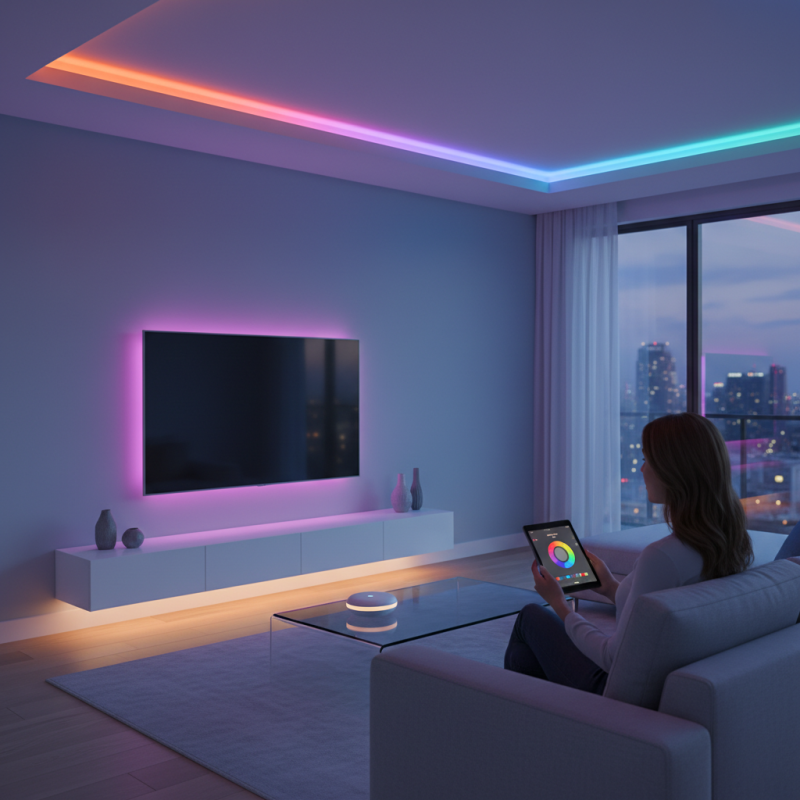
LED strip lights have become increasingly popular in modern homes. These lights are flexible circuits embedded with light-emitting diodes (LEDs). Their compact size allows them to fit into various spaces. You can use them under cabinets, along walls, or for accent lighting. Understanding their components is vital for effective use.
The main parts of LED strip lights include the LED chips, a PCB (printed circuit board), and a power supply. The LED chips determine the color and brightness. They are typically arranged on the PCB, which serves as a base for connectivity. The power supply provides the necessary voltage. It's crucial to choose the correct power adapter to avoid damage. Additionally, some strips come with adhesive backing for easier installation.
When integrating these lights with smart home systems, one can face challenges. Compatibility is essential; not all strips work with every smart system. Configuring settings may require technical knowledge. Sometimes, the lights may not respond as expected. Testing the connections and settings is important for smooth operation. Setting up these lights can be a rewarding project, though it may require patience and adjustments.
When considering smart home systems for controlling LED strip lights, compatibility is essential. Many systems such as Zigbee and Z-Wave are popular. They allow for efficient communication between devices, enhancing functionality. Reports indicate that nearly 45% of households will have smart lighting solutions by 2024. This trend points to an increasing demand for reliable integration.
Your choice of a smart home system should reflect your specific needs. Some systems prioritize energy efficiency. Others focus on ease of use and compatibility with various devices. A survey conducted in early 2023 revealed that 70% of users value cross-compatibility among smart devices. This can be a double-edged sword. While simplicity in integration is useful, it may limit depth in features.
Assessing the user interface is also vital. Systems should provide intuitive controls to manage lighting settings easily. Limited customization options can frustrate users. A balanced interface offers functionality without overwhelming the user. Additionally, ongoing software updates ensure your system remains relevant and secure. The importance of research cannot be overstated. An informed choice leads to better lighting experiences. Avoiding impulse purchases is critical here.
Connecting LED strip lights to smart home systems can transform your living environment. These flexible lights can enhance ambiance and provide practical illumination. To start, you will need the right connectors and a compatible hub. A wireless connection is often preferred for ease of installation.
Once you have your LED strip lights, assess your home layout. Determine where you want the lights installed. This could be under cabinets or along walls. Each area has different requirements for power and control. Install the lights securely, ensuring they have a stable power source.
Smart home systems often allow for automation, enabling you to schedule your lighting or adjust brightness remotely.
Compatibility is key when linking these systems. Some lights require specific apps for control. It’s essential to read user manuals carefully. This step can prevent future frustrations.
While many installations go smoothly, issues may arise, such as connectivity problems or inconsistent responses. Test your setup frequently to ensure reliability. Understanding your system will help you make adjustments as needed.
Voice assistants have revolutionized the way we control our home environments, including LED strip lights. According to a recent survey by the Consumer Technology Association, nearly 30% of U.S. households now use some form of smart home technology. This trend highlights the increasing reliance on voice-controlled systems for everyday tasks and home automation.
Using voice commands, users can effortlessly adjust the brightness and color of their LED strip lights. Research indicates that 60% of smart home users prefer voice interactions due to convenience. Imagine changing the ambiance of your room with simple phrases like "Set the lights to blue" or "Dim the lights to 50%." This capability not only enhances user experience but also makes technology more accessible for those who may struggle with traditional interfaces.
However, not everything is perfect. Voice recognition can sometimes misinterpret commands, leading to unexpected outcomes. Users may find themselves frustrated when lights don’t respond as intended. Continuous updates and improvements in natural language processing are essential to address these issues. Despite the challenges, the potential for energy efficiency and convenience with voice-controlled LED strip lights is undeniable.
Automation and scheduling of LED strip lights elevates smart home functionality. A report by Grand View Research highlights that smart lighting systems growth is projected at 23% annually through 2027. This surge reflects a shift in consumer preferences towards automated solutions that simplify daily tasks.
Scheduling LED strip lights can create the perfect ambiance for any activity. For instance, fading lights can signal bedtime routines, promoting restful sleep. Users can program lights to gradually brighten in the morning, mimicking a natural sunrise. This method improves mood and productivity, as supported by data from the National Sleep Foundation.
However, challenges exist in achieving seamless automation. Inconsistent connectivity and compatibility issues may frustrate users. Additionally, a study from the Journal of Consumer Electronics indicates that only 30% of smart home users fully adopt scheduling features. This highlights a gap in understanding how to utilize these technologies effectively. Reflecting on user experiences is key to addressing these imperfections in smart home automation.
: LED strip lights are flexible circuits with light-emitting diodes. They can fit into various spaces.
The main parts include LED chips, a printed circuit board, and a power supply. Each has a vital function.
You can install them under cabinets or along walls. Ensure secure installation and a stable power source.
Compatibility issues may arise with smart systems. Sometimes, lights may not respond as expected.
Compatibility is key. Not all strips work with every smart system. Check manuals before installation.
Test your connections frequently. Understanding your system helps make adjustments and resolve issues.
Yes, many systems allow you to automate scheduling. This enhances convenience and control over your environment.
Frustrations can arise. Ensure all connections are correct and consider testing the settings again.
Not all strips have adhesive backing. Check product specifications to see if it comes with this feature.
Using the wrong adapter can damage the lights. Always ensure the voltage matches the requirements.
In modern smart homes, knowing how to control LED strip lights with smart systems can enhance both convenience and ambiance. The process begins with an understanding of LED strip lights and their essential components, ensuring that users can choose the right type of lights that fit their needs. Selecting an appropriate smart home system is crucial for effective control, as compatibility will influence the overall functionality.
Once connected, users can utilize voice assistants to manage their LED strip lights effortlessly, adding a hands-free element to their home automation. Furthermore, incorporating automation and scheduling features allows homeowners to set lighting scenes and patterns according to their daily routines. By following these steps, individuals can seamlessly integrate LED strip lights into their smart home environment, maximizing the potential for customized and automated lighting experiences.
