How to Cut and Connect LED Strip Lights for Best Results?

Time:2026-05-07 Author:Sienna
0%

When it comes to illuminating spaces with LED strip lights, the technique of cutting and connecting them plays a pivotal role. Expert John Techman notes, "Knowing how to cut and connect LED strip lights can truly enhance your lighting experience." Properly executed, this skill allows for flexibility in design and functionality.

Cutting LED strips is not as straightforward as it seems. It's crucial to identify the cut points to avoid damaging the strips. It's easy to make mistakes if you're not cautious. The connection process also requires precision; incorrect wiring can lead to malfunction. Using quality connectors can ensure a steady performance for your lighting setup.

However, everyone makes mistakes. Perhaps you’ve tried cutting in the wrong spot. Or maybe your connections didn't hold. Learning from these experiences improves your techniques. Ultimately, mastering how to cut and connect LED strip lights opens a world of creative possibilities for both beginners and seasoned DIY enthusiasts.
How to Cut and Connect LED Strip Lights for Best Results?

Understanding LED Strip Lights: Types and Applications

LED strip lights have become a popular lighting solution for various applications. They are flexible, energy-efficient, and versatile. Understanding the different types of LED strip lights is crucial. Typically, they come in single color, RGB, and RGBW options. A recent industry report found that the global LED strip light market is expected to grow by nearly 30% from 2023 to 2028. This reflects the increasing demand for innovative lighting solutions.

When considering applications, LED strips shine in both residential and commercial spaces. They enhance the ambiance of living rooms and kitchens, providing subtle or vibrant lighting effects. In retail environments, these lights help highlight displays and create a captivating shopping experience. However, it's essential to choose the right type for each setting. Some strips might not offer sufficient brightness for larger areas, leading to uneven lighting.

Professionals recommend considering the power consumption of different LED strip types. High-density strips provide more light but may require additional considerations for heat dissipation. A 2022 study highlighted that improper installation can lead to flickering or reduced lifespan. Therefore, ensuring proper connections and cutting practices is key to maximizing performance. Thoughtful planning and installation can prevent common pitfalls and boost overall effectiveness.

Essential Tools for Cutting and Connecting LED Strip Lights

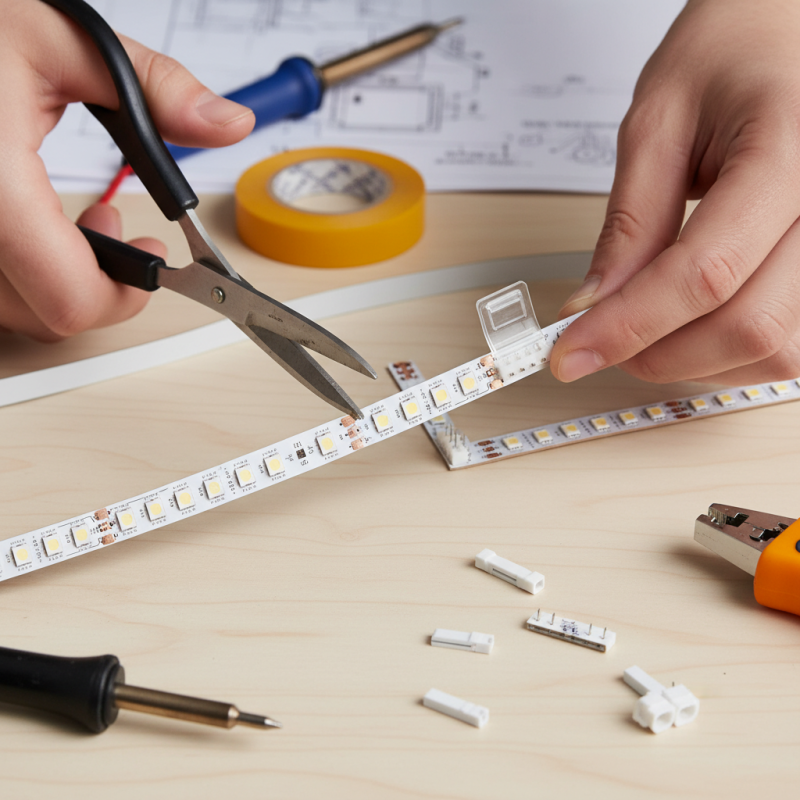
When cutting and connecting LED strip lights, having the right tools is crucial for achieving optimal results. A sharp pair of scissors or a utility knife is essential. These tools ensure clean cuts at designated points on the strip. A cutting board can protect your surfaces and provide stability. Many users underestimate these simple yet vital tools. Poor cuts can lead to uneven lighting and affect the overall appearance.

Wire connectors are another essential tool. They allow for seamless connections between strips. A soldering iron can also be beneficial for those willing to engage in a more permanent solution. According to a report by the LED Manufacturers Association, improperly connected strips can lose up to 30% of their intended brightness. This statistic highlights the importance of using the correct tools to ensure proper connections.

Moreover, measuring tape is often overlooked. Accurate measurements prevent excess strip waste. Incorrect lengths may force users into unnecessary adjustments later. These practical tools play a significant role in the installation process. Investing in the right equipment can save time and effort in the long run.

LED Strip Lights Connection Efficiency

Step-by-Step Guide to Cutting LED Strip Lights Accurately

Cutting LED strip lights can seem daunting. However, with the right approach, anyone can achieve clean and precise cuts. Before you begin, measure the area where you plan to install the lights. Mark the strips with a pencil at every cutting point, which is usually indicated by a dotted line. This small detail helps in making accurate cuts, preventing any unwanted damage to the light strips.

When using scissors or a sharp utility knife, press firmly. Cut along the marked line to avoid frayed edges. It’s crucial to be meticulous here; any uneven cut can affect the overall lighting quality. After cutting, you will notice copper pads on each end. These pads are essential for connecting wires. Take care to only solder or connect the wires to these pads. If any mistakes occur, you may have to cut again or risk damaging the strip.

For connections, use high-quality connectors or soldering techniques, ensuring a solid electrical connection. Applying heat shrink tubing can also protect the joints from damage. Remember, this part is just as important as cutting. Even small flaws can lead to flickering lights. Keeping a cool head will help deal with any unexpected challenges during the process. Practice and patience will lead to a more satisfying LED strip installation.

Methods for Connecting LED Strip Lights Efficiently

Connecting LED strip lights efficiently requires understanding different methods, which can profoundly impact installation ease and performance. One effective way is to use solderless connectors. These connectors allow for quick and easy connections without the need for soldering tools. According to a report from the Lighting Research Center, using solderless connectors can reduce installation time by up to 30%. They provide a reliable connection, minimizing the risk of damage to the LED strips.

Another important factor is ensuring adequate power supply. Many LED strips require a regulated power supply to function effectively. A study published in the Journal of Electrical Engineering highlights that mismatched voltages can lead to flickering or complete failure of LED strips. Additionally, one must consider the total wattage of the connected strips to avoid overloading the power supply. This attention to detail can save time and prevent costly mistakes during a project.

Some common issues arise during the connection process. For example, misalignment of strips can lead to uneven lighting and weak connections. Many people overlook this detail, which can spoil the visual effect of the installation. Taking a moment to ensure everything aligns before finalizing connections can greatly enhance the result. Learning from these common pitfalls can improve future installations.

Tips for Ensuring a Safe and Proper LED Strip Installation

When installing LED strip lights, safety is paramount. According to the National Fire Protection Association (NFPA), improper installations account for around 30% of electrical fires. Understanding how to cut and connect LED strips properly can significantly reduce these risks. Select the right tools—scissors for cutting, and connectors that fit snugly. Always follow the manufacturer's cut points. Using the wrong connectors can lead to overheating.

Proper insulation and securing of connections are crucial. A study by the Illuminating Engineering Society highlighted that inadequate insulation can reduce the lifespan of LED strips by up to 50%. Ensure all connections are secure and use heat-shrink tubing where necessary. Remember, not all connectors are equal. Some may not handle voltage peaks well, leading to failures or even hazards.

Experimenting with LED strip arrangements is common. However, be mindful of each connection. A loose or poorly connected strip can flicker or fail. Inadequate spacing can create a harsh glare. Each component plays a role in achieving uniform brightness. Always keep your work area clean to avoid accidents and ensure you are adequately informed before making any changes.

FAQS

: What are the main types of LED strip lights?

: The main types include single color, RGB, and RGBW options. Each serves different lighting needs.

How can I enhance my living space with LED strips?

Use LED strips to create subtle or vibrant lighting effects in living rooms and kitchens. They add ambiance.

What should I consider for large areas when using LED strips?

Larger areas may need brighter strips to avoid uneven lighting. Choose the right type for your space.

How can improper installation affect LED strips?

Improper installation can cause flickering and reduce their lifespan. Ensure proper connections to maximize performance.

What is the best way to cut LED strip lights?

Measure and mark where to cut. Use scissors or a knife along the dotted line for clean cuts.

Why is it important to connect to copper pads?

Copper pads are essential for making electrical connections. Mistakes can damage the LED strip. Be precise.

What are solderless connectors?

Solderless connectors allow for quick connections without soldering. They can reduce installation time significantly.

Why does matching voltage matter?

Mismatched voltages can lead to flickering or failure. Ensure the power supply matches the LED strip requirements.

How can misalignment impact my installation?

Misalignment can cause uneven lighting and weak connections. Take time to align strips properly before finalizing.

What should I do if I face unexpected challenges during installation?

Stay calm and take your time. Practice and patience can lead to a better installation outcome.

Conclusion

This article provides a comprehensive guide on how to cut and connect LED strip lights for optimal results. It begins with an understanding of various types of LED strip lights and their applications, which helps readers choose the right product for their projects. Essential tools required for cutting and connecting the strips are also outlined, ensuring that users are well-equipped for the task.

The article features a step-by-step guide that emphasizes accuracy in cutting LED strip lights, along with efficient methods for connecting them. Additionally, it offers tips to ensure a safe and proper installation, reinforcing best practices throughout the process. By following these guidelines, DIY enthusiasts and professionals alike will achieve the best outcomes with their LED strip lighting projects.

Sienna

Sienna

Sienna is a skilled marketing professional with a deep expertise in our company’s core products and services. With a passion for innovation and detail, she plays a pivotal role in crafting insightful blog posts that not only highlight the unique features of our offerings but also provide valuable......