Halo Light
When considering LED technology, buyers often ask, "what is the difference between cob and smd led?" This question is crucial for selecting the right lighting solution. James Fisher, a leading expert in LED technology, states, “Understanding the differences between COB and SMD can significantly impact your project's outcome.”
COB (Chip on Board) LEDs offer higher intensity and a more even light distribution. However, they tend to be more expensive. SMD (Surface Mount Device) LEDs, on the other hand, are more versatile and cost-effective. Their smaller size allows for various applications. Yet, they may not provide the same brightness levels as COB LEDs.
Buyers should evaluate their specific needs before committing. Each technology has its pros and cons. Some may find COB’s quality appealing, while others may prioritize cost with SMD. Reflecting on these factors can lead to better decisions. Understanding these differences is key to achieving optimal results in lighting projects.
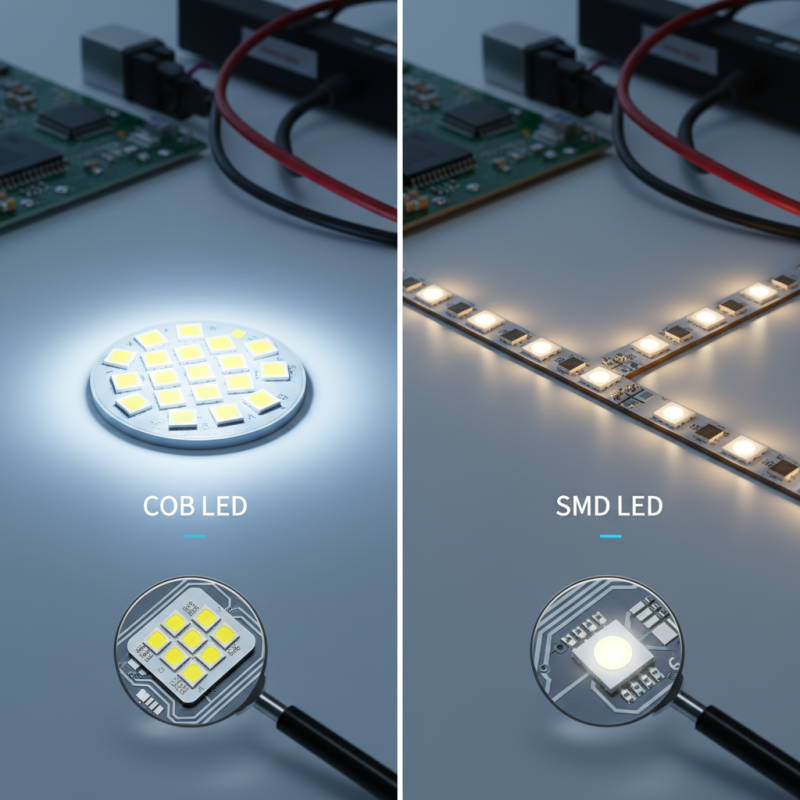
COB (Chip on Board) and SMD (Surface-Mounted Device) LEDs serve distinct roles in lighting technology. COB LEDs combine multiple chips into a single module, creating a compact light source. This design allows for high lumen output while maintaining a small footprint. Their efficiency makes them excellent for applications requiring intense light, such as high-bay lighting or spotlighting.
On the other hand, SMD LEDs are mounted individually onto circuit boards. This method permits more precise control over light distribution. SMDs excel in applications like screens and flexible lighting solutions. They often have better color consistency and are easier to replace. However, they can generate more heat compared to COBs, which may require additional cooling considerations.
Evaluating these options demands an understanding of specific needs. Consider installation space, heat management, and desired brightness levels. Choosing the right LED type is not straightforward. Each has its advantages and drawbacks that must align with application requirements. A deeper exploration can lead to better decisions. Selecting the right LED involves careful reflection on performance metrics and lighting goals.
LED technology has transformed the lighting industry with innovations like COB (Chip on Board) and SMD (Surface Mounted Device) LEDs. When comparing efficiency, lumens per watt is a crucial metric. Typically, COB LEDs offer better efficiency, producing more lumens per watt than SMDs. This means they can deliver brighter light with lower energy consumption, making them a popular choice for various applications.
However, SMD LEDs also have their advantages. They are often smaller and more versatile. SMDs provide flexibility in design, allowing for creative lighting solutions that might not be possible with larger COB units. The trade-off may be efficiency versus adaptability. The choice often depends on specific project requirements and environmental considerations.
Buyers must reflect on what suits their needs best. High-efficiency COBs may shine brighter but can be bulkier. SMDs might fit into tighter spaces while consuming more energy. The decision involves weighing these factors against budget constraints and desired outcomes. Evaluating these differences ensures informed choices that align with both project goals and energy-saving initiatives.
As the LED market evolves, understanding the cost dynamics of COB and SMD technologies becomes crucial for buyers. In 2026, pricing trends for these two types of LEDs are influenced by various factors. COB LEDs, known for their high efficiency and compact design, often come with a higher initial cost compared to SMD LEDs. This premium reflects their advanced technology and superior thermal management. Many users appreciate the intense brightness and uniform light distribution provided by COB LEDs. However, this can lead to hesitancy among buyers focused on budget.
On the other hand, SMD LEDs present a more economical option. They are popular for their versatility and ease of installation. The initial cost is typically lower, making them an attractive choice for many applications. Yet, some may overlook the long-term energy savings associated with COB technology. As demand grows, price fluctuations are likely. Buyers must weigh upfront costs against performance longevity. Choosing between COB and SMD can feel overwhelming, especially for those unfamiliar with the nuances of each option.
Careful reflection is necessary when selecting the right LED for specific applications. Cost should not be the only consideration. Performance, energy efficiency, and application requirements play critical roles. Understanding these factors is essential for making an informed decision in the competitive LED landscape of 2026.
The global market for LED technology is evolving. Both COB (Chip on Board) and SMD (Surface Mounted Device) LEDs have distinct advantages. Historically, SMD LEDs have been more popular. However, recent trends indicate a shift toward COB technology, especially in high-power applications. This change is driven by COB’s superior light output and efficiency.
Adoption rates of COB LEDs are rising due to their compact design and improved thermal performance. Many manufacturers are exploring this technology. Meanwhile, SMD LEDs still dominate in consumer products and applications requiring flexibility. One critical factor for buyers is considering application needs. Adjust your choice according to the specifics of your project.
Tips: Always assess the space available for installation. COB LEDs need a proper cooling mechanism. However, if you want versatile options, SMD may be better for your needs. Remember, not all projects require high-intensity lighting. It's essential to align your choice with your technical requirements, ensuring both efficiency and effectiveness. It's easy to overlook these details in a rush, but they can make a significant difference.
When comparing COB (Chip on Board) and SMD (Surface Mount Device) LEDs, performance metrics such as lifespan and thermal management play crucial roles. COB LEDs generally have a longer lifespan due to their larger chip surface area. This feature allows more efficient heat dissipation. Heat management is vital for LED longevity and performance. Poor thermal conduction can lead to quicker degradation. SMD LEDs are smaller and compact, making them suitable for intricate designs. However, they can struggle with heat, particularly in high-power applications.
In terms of thermal management systems, COB LEDs often incorporate advanced heat sinks. These components aid in keeping the junction temperatures lower, enhancing overall performance. With SMD LEDs, achieving effective thermal management can be trickier. They may require additional design considerations, like larger PCBs or external heatsinks. Both types have their strengths and weaknesses, creating room for reflection on which is optimal for specific use cases.
Buyers need to evaluate their unique needs. COB LEDs might be ideal for high-output applications, while SMD LEDs excel in tight spaces. The choice often hinges on understanding these performance metrics and how they align with a project’s demands.
: COB (Chip on Board) LEDs combine multiple chips into a single module. SMD (Surface-Mounted Device) LEDs are mounted individually.
COB LEDs provide high lumen output in a compact design. They are efficient for applications needing intense light.
SMD LEDs offer precise light control and are ideal for screens or flexible lighting. They have better color consistency.
COBs generally manage heat better than SMDs. SMDs may need added cooling solutions for high-power usage.
Yes, COBs usually have a higher initial cost. This reflects their advanced technology and superior performance.
COB LEDs typically last longer due to better heat dissipation. SMDs can face quicker degradation if heat is not managed well.
Yes, SMD LEDs are generally easier to replace due to their individual mounting. They are user-friendly in various installations.
SMDs are great for tight spaces. COBs are better for applications needing higher output but require more space.
Buyers often focus solely on cost. They might neglect performance, longevity, and specific application needs.
Reflect on your performance requirements, cost, and thermal management. Understanding these factors helps narrow your options.
The article titled "2026 Top COB vs SMD LED Key Differences for Global Buyers" explores the fundamental distinctions between COB (Chip on Board) and SMD (Surface Mount Device) LEDs, focusing on their design and applications. A critical aspect addressed is "what is the difference between cob and smd led," highlighting their efficiency in lumens per watt, cost trends, and global market adoption rates in 2026. Additionally, it analyzes performance metrics such as lifespan and thermal management, providing a comprehensive understanding for buyers making informed decisions.
As the demand for efficient lighting solutions grows, understanding these differences becomes essential. The article offers insights into how COB and SMD technologies cater to varying needs, revealing their respective advantages and challenges in different lighting applications.
