Selecting the right voltage for LED strip lights is crucial for your project's success. Industry expert David Thompson, a certified lighting designer, emphasizes, "Choosing the right voltage can make or break your lighting effects." Understanding "what voltage LED strip lights should I use" is vital for both aesthetics and functionality.
Different projects require different voltages. Common options are 12V and 24V, each with its advantages. Lower voltage strips are easier to find, but they may not cover larger areas as effectively. On the other hand, 24V strips can provide more brightness and longer runs. However, not every project requires the highest voltage.
When considering your project, think about size, brightness, and flexibility. Mistakes in voltage selection can lead to unexpected results. Lesser-known factors like total length and power supply quality also matter. Each element plays a role in achieving the desired outcome. It's important to reflect on these details before making a decision.
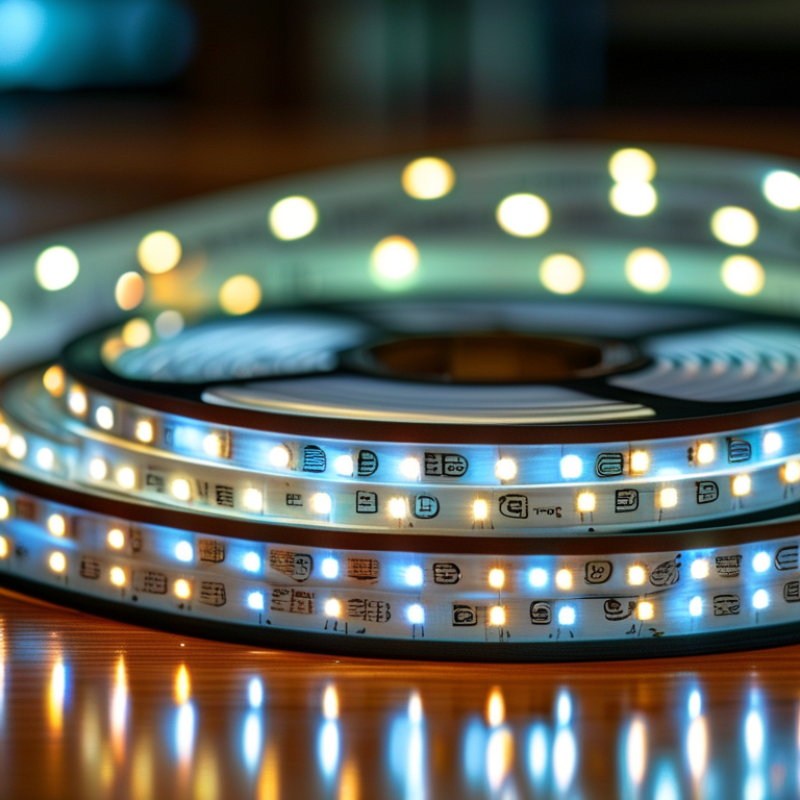
Types of Voltage for LED Strip Lights: A Comprehensive Overview
LED strip lights come in various voltage options, typically 12V and 24V. The choice of voltage can significantly affect both the performance and longevity of the lights. For example, a report by the Lighting Research Center indicates that 24V strips generally provide better efficiency and longer runs without voltage drop issues, compared to their 12V counterparts.
When selecting voltage, consider your project’s specific needs. If you plan to install long runs, 24V strips are ideal. They minimize the risk of brightness variations over distances. Conversely, 12V strips work well for shorter installations and are more common in residential settings. Data also shows that 12V strips are often easier to find, making them a go-to for DIY enthusiasts.
You might encounter challenges with compatibility. Not every transformer works seamlessly with all LED strips. This mismatch can lead to flickering or inconsistent brightness. It is essential to ensure that both the voltage and amperage ratings of the power supply match the needs of the LED strip. Being aware of these details can prevent issues during installation and use.
Understanding Voltage Ratings: 12V vs 24V LED Strip Lights
When choosing LED strip lights, understanding the voltage ratings is crucial. Generally, 12V and 24V options are available. Each voltage type has unique strengths, impacting your project’s success. Many professionals prefer 24V strips for larger installations due to their efficiency. According to the latest industry reports, 24V strips can deliver more lumens per watt, enhancing brightness and reducing power losses over longer distances.
Conversely, 12V strips are favored for smaller applications. They are often more flexible and easier to install. However, a significant downside is voltage drop. For runs exceeding 16 feet, 12V strips may exhibit dimmer lighting toward the end. This can be frustrating when aiming for uniform brightness.
Furthermore, it’s vital to assess the power supply. The wrong voltage can lead to poor performance or damage. Ensure compatibility between the LED strips and the power source. An insufficient supply can hinder the function, leading to flickering or complete failure. Always consider the project’s specific needs. Assessing the area, desired brightness, and installation length can guide your choice between 12V and 24V. Remember, selecting the right voltage is a key step in achieving optimal results.
What Voltage LED Strip Lights Should I Use for Your Project?
| Voltage |
Max Length (ft) |
Brightness (lm/ft) |
Power Consumption (W/ft) |
Best Use Cases |
| 12V |
16 |
300 |
4.8 |
Indoor lighting, accent lights |
| 24V |
32 |
600 |
3.6 |
Outdoor lighting, continuous runs |
| 12V |
16 |
480 |
6.0 |
Home décor, under cabinets |
| 24V |
32 |
350 |
4.0 |
Commercial spaces, large areas |
Power Consumption Considerations for Different LED Voltages
When choosing LED strip lights, understanding power consumption is vital. Different voltages—12V, 24V, and 48V—impact efficiency and energy use. According to a report by the Lighting Research Center, 24V strips typically provide better efficiency compared to lower voltage options. They often consume fewer watts per foot while delivering the same brightness.
Using a lower voltage can lead to higher current draw. This may result in voltage drop, causing dimming and uneven lighting. For projects requiring longer runs, a 24V system is often recommended. It minimizes the influence of resistance over distance, ensuring consistent performance.
Tips: Always calculate the total wattage your project needs. Consider the length of the strip and the brightness per foot. If you're uncertain, using a higher voltage strip can sometimes offer more flexibility. Additionally, connect strips in parallel rather than series to maintain consistent brightness. Ultimately, choosing the right voltage not only improves efficiency but also enhances the longevity of your LED strip lights.
Choosing the Right Transformer for Your LED Strip Lights
When selecting the right transformer for your LED strip lights, it's crucial to consider voltage and wattage. Most LED strips operate on either 12V or 24V. This choice directly impacts the performance and efficiency of your lighting project. If you choose a transformer with a higher voltage than your strip, it can cause damage. Always match the voltage of your transformer with your LED strip lights.
Wattage is another essential factor. Calculate the total wattage needed by multiplying the length of your LED strip by its wattage per foot. Select a transformer that can handle at least 20% more than this total to ensure reliability. A transformer that is underpowered can lead to flickering lights or even failure.
Lastly, consider the quality of the transformer. A cheaper option may not offer stable voltage, leading to inconsistent lighting. While it might save you money upfront, it can result in reduced lifespan for your LED strips. Investing in a high-quality transformer is essential for achieving optimal results in your lighting project. Planning and selecting carefully can save you from future headaches.
Common Applications and Best Practices for LED Strip Voltage Selection
When selecting LED strip lights for your project, voltage plays a crucial role. Common options include 12V and 24V. Understanding your needs can significantly impact the effectiveness of your lighting. For residential spaces, 12V strips are often suitable. They’re easier to work with in small areas. However, 24V strips provide a more stable power supply. This means they often produce brighter light and have a longer run length without significant voltage drop.
Consider the application while making your choice. LED strips for accent lighting may prefer 12V, as they are less intense. In contrast, 24V strips work better for larger projects. They offer better performance in higher demand settings. Still, it’s key to assess the power source carefully. Using the wrong voltage can lead to flickering or even damage. Sometimes, DIY enthusiasts overlook the specific requirements of their project, leading to frustration later.
In terms of best practices, always verify the specifications of your LED strips. Power ratings are important. Using transformers that align with these ratings is necessary. Check how long the strips will run. Long runs might require additional considerations for voltage drop. Reflecting on your project's requirements will ensure a more satisfying installation experience.
Voltage Selection for LED Strip Lights
This chart illustrates the common applications for various LED strip voltages. The data indicates the popularity of each voltage type based on typical usage in different projects.
Conclusion
When considering "what voltage LED strip lights should I use" for your project, it's crucial to understand the differences between the various voltage options, primarily 12V and 24V. Each voltage type has unique power consumption characteristics and suitability for specific applications. For instance, 12V LED strips are typically better for short runs or installations where flexibility is needed, while 24V strips are more efficient for longer runs due to reduced voltage drop.
Choosing the right voltage also involves selecting an appropriate transformer that matches your LED strips and project requirements. Additionally, by understanding common applications and best practices, you can ensure optimal performance and longevity of your LED lighting setup. By evaluating these factors carefully, you'll be better equipped to make an informed decision on the best voltage LED strip lights for your needs.
 Halo Light
