Halo Light
Halo Light
Halo Light
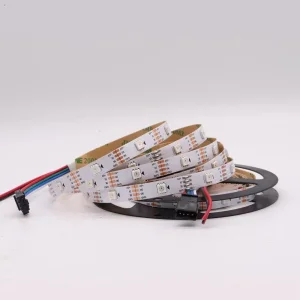
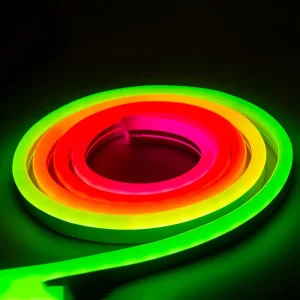
Explore our high-performance, specification-grade flexible LED strips engineered for integration with advanced driver solutions.
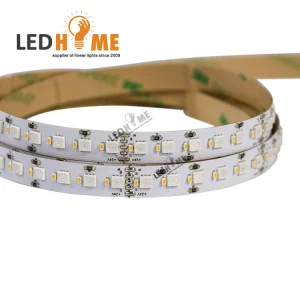
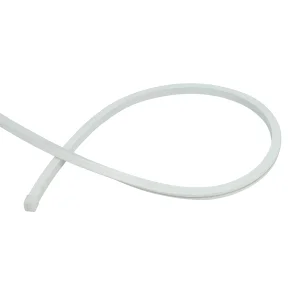
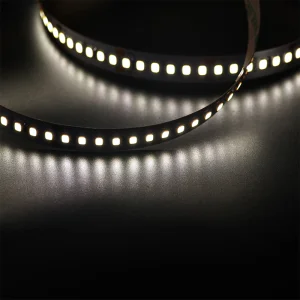
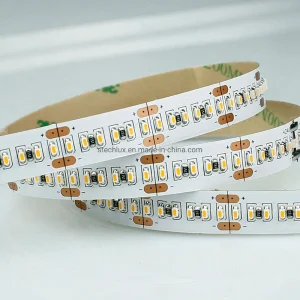
Hangzhou Halo Light Co., Ltd. has steadily evolved into a competitive LED strip light manufacturer, specializing in advanced Neon Flex, SMD, and COB LED lighting solutions for global markets. Since its establishment, the company has focused on combining innovation, quality manufacturing, and customer-oriented service to meet the growing demand for energy-efficient and flexible lighting systems.
Based in Hangzhou, a key center for technology and manufacturing in China, Halo Light operates a modern production facility equipped with automated assembly lines and strict quality control processes. Over the years, the company has built a professional team of engineers and technicians dedicated to continuous product development and performance optimization.
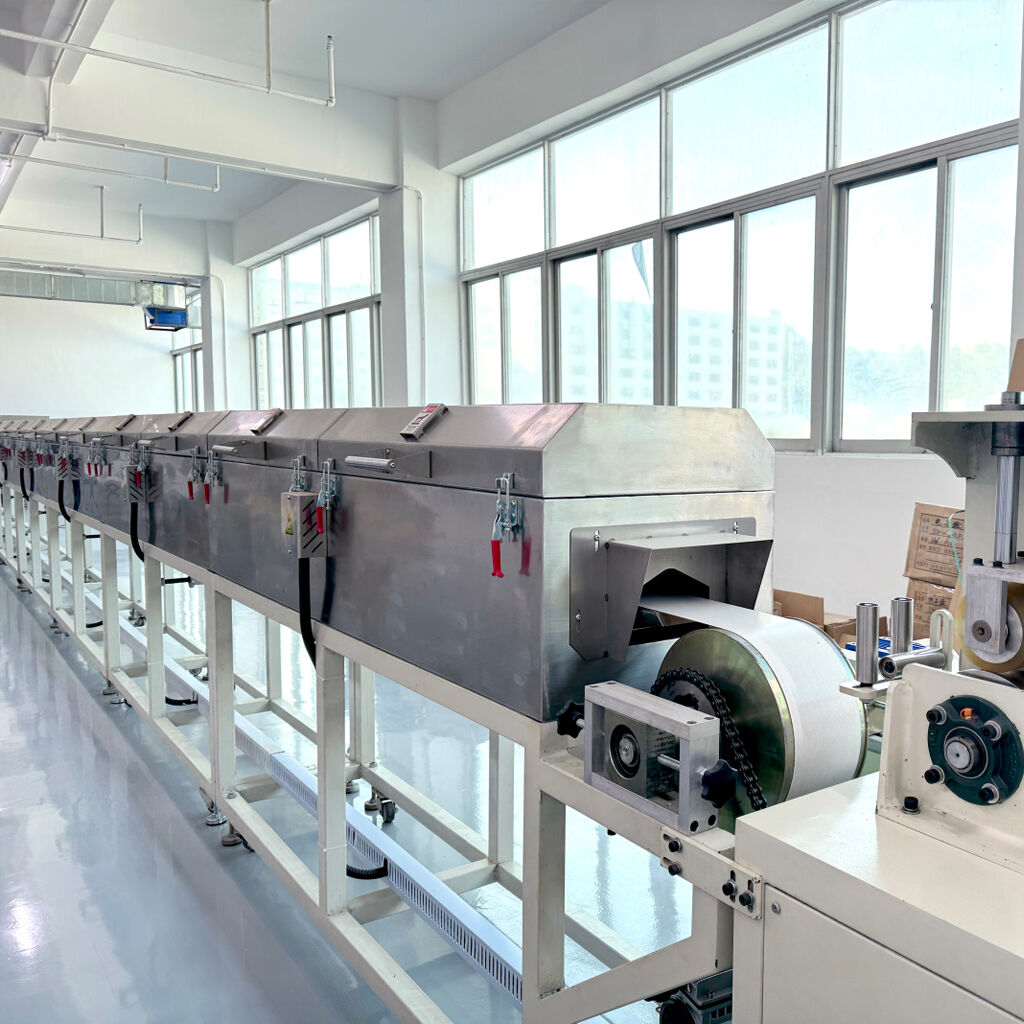
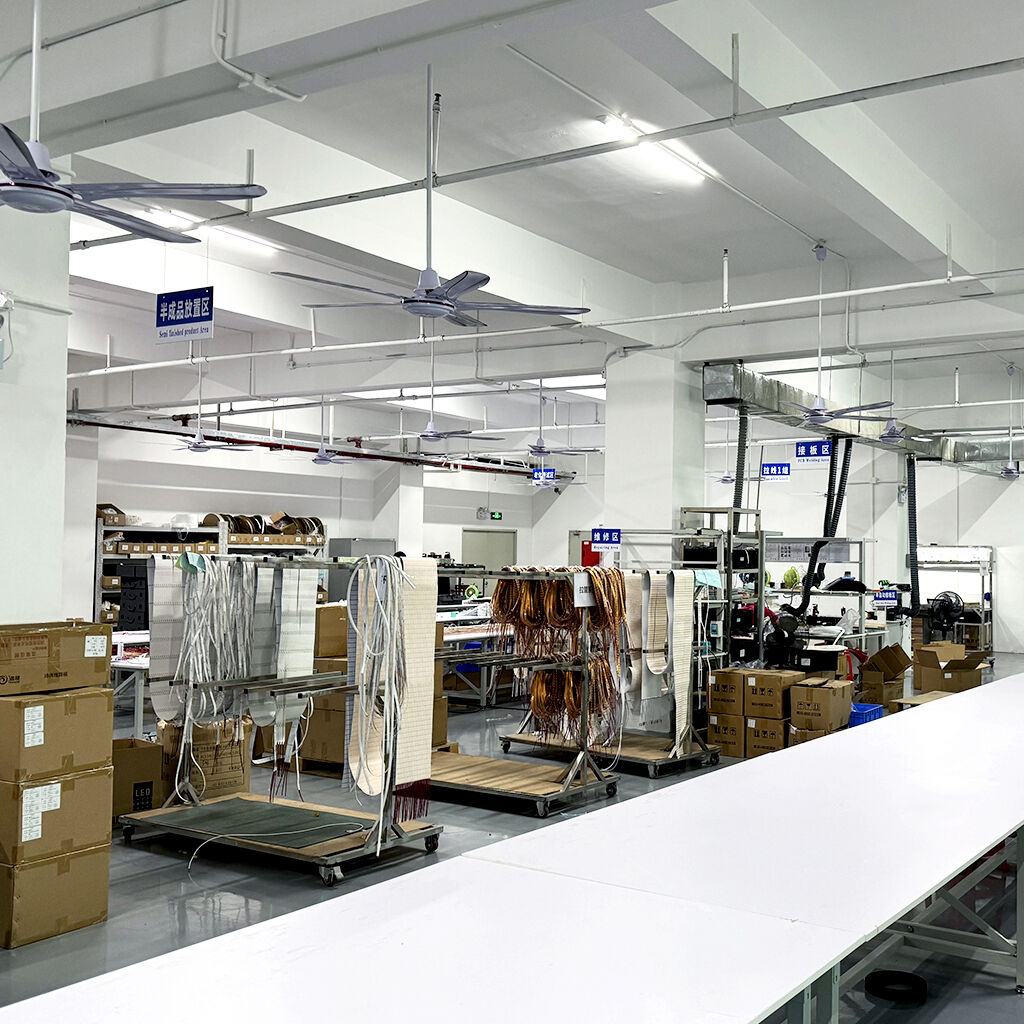
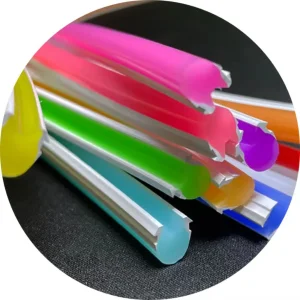
With a strong emphasis on research and development, Hangzhou Halo Light has expanded its product range from standard LED strip lights to high-density COB strips, durable Neon Flex solutions, and intelligent lighting systems suitable for architectural, commercial, and residential applications. Its products are widely recognized for their stability, brightness consistency, and long service life. Driven by global market trends and sustainable development goals, the company continues to enhance its manufacturing capabilities and expand its international presence, aiming to deliver reliable, efficient, and innovative LED lighting solutions worldwide.
Understanding the critical role of LED drivers (power supplies) in the reliability, thermal dynamics, and control infrastructure of professional lighting installations.
Over 90% of LED strip light system failures are attributed directly to the failure of the power supply unit (PSU) rather than the LED diodes themselves. Thermal management and capacitor selection are the ultimate deciders of longevity.
Global architectural projects mandate specific certification baselines. North America requires UL Class 2 limits (under 60V DC / 100W per channel). Europe relies on SELV (Safety Extra Low Voltage) and CE/ENEC pathways, requiring distinct manufacturing topologies.
Modulating linear lighting involves complex dimming profiles (DALI-2, 0-10V, TRIAC, PWM, DMX/RDM). Modern factories must supply integrated control modules with high-frequency PWM outputs to eradicate visual and camera flicker.
The production of LED strip light power supplies requires a hyper-dense ecosystem of components—ranging from high-frequency transformers, power MOSFETs, and electrolytic capacitors to integrated control ICs and thermal dissipation housings.
Chinese electronics manufacturing clusters in Zhejiang (Hangzhou/Ningbo) and Guangdong (Shenzhen/Huizhou) offer unparalleled supply chain integration. The proximity of component suppliers allows factories to test, iterate, and customize driver layouts rapidly, dramatically reducing lead times for global projects.
Furthermore, leading Chinese factories invest heavily in automated SMT (Surface Mount Technology) assembly lines, automated optical inspection (AOI), and robotic dynamic load aging chambers, ensuring that mass production is highly consistent and free of structural defects.
A detailed audit of the industry's leading manufacturers based on engineering innovation, global safety compliance, product reliability, and project flexibility.
Widely acknowledged as the global standard for industrial and commercial power supplies. Mean Well's HLG, ELG, and XLG series are industry benchmarks for constant voltage LED driving. Their products feature unparalleled robust thermal design and a global reputation for safety compliance.
A powerhouse in high-power outdoor and commercial drivers, recently acquiring OSRAM Digital Systems' European and Asian operations. Known for high surge protection thresholds (up to 10kV) and advanced DALI-2 and wireless programming capabilities, setting the standard for smart city infrastructure.
Delta stands as one of the world's largest power supply manufacturers. Their specialized LED drivers are engineered for massive commercial architectural projects. Delta is renowned for exceptionally high efficiency ratings (up to 95.5%) and sophisticated active power factor correction (PFC) circuitry.
An innovative, vertically integrated manufacturer that bridges the gap between raw LED driver components and finished LED light strip systems. Halo Light provides tailored power supply integrations, optimizing the driver-load interface to eliminate voltage drop, maximize luminous efficacy, and assure high CRI consistency across massive commercial projects.
A specialized manufacturer focusing exclusively on LED drivers for commercial indoor linear lighting and panel lights. Lifud is highly regarded for its flicker-free technology, extremely competitive pricing structure, and compact, low-profile designs that easily fit inside narrow light strip aluminum tracks.
LTECH is a pioneering force in intelligent LED controllers and dimmable power supplies. They are famous for their T-PWM digital dimming technology, which allows smooth dimming down to 0.01% without any color temperature shift, making them the default choice for luxury retail and high-end residential spaces.
A listed enterprise focused on high-efficiency consumer electronics and outdoor high-power LED drivers. Their LDP and LCP series are popular for outdoor landscape linear illumination, featuring robust metal housings, high IP levels, and comprehensive thermal-overload protection schemes.
With over two decades of focus on dimming control and driver technology, Euchips provides highly compatible dimmable drivers. Their products are fully compatible with major control systems like Lutron, Dynalite, Philips, and Helvar, avoiding dimming incompatibility on job sites.
A premium European brand under the Zumtobel Group. Tridonic represents the pinnacle of technology, offering IoT-ready drivers with their net4more platform. Excellent choice for high-end European architectural specifications, offering high reliability, extensive warranty coverage, and top-tier support.
The global leader in integrated illumination solutions. Their Xitanium series of drivers represents high reliability and advanced thermal foldback options. Ideal for institutional specifications where strict compliance to standards and multi-decade longevity is required.
A high-level technical breakdown of standard product ranges across the top driver manufacturers to aid procurement managers in supplier filtering.
| Manufacturer | Primary Voltages | IP Rating Ranges | Control Protocols | Target Segment | Typical Warranty |
|---|---|---|---|---|---|
| Mean Well | 12V, 24V, 36V, 48V | IP20 - IP67 | DALI, 3-in-1 dimming, KNX | Industrial, General Commercial | 5 - 7 Years |
| Inventronics | 24V, 48V | IP66 - IP67 | DALI-2, 0-10V, NFC programmable | Outdoor, Streetlighting, Heavy Duty | 5 - 7 Years |
| Delta Electronics | 12V, 24V, 48V | IP20 - IP67 | 0-10V, DALI, Modbus | Mass OEM Projects, Industrial | 5 Years |
| Hangzhou Halo Light | 5V, 12V, 24V, 36V, 220V | IP20 - IP68 | PWM, TRIAC, Smart App, DMX | Integrated Strips, Custom Projects | 3 - 5 Years |
| Lifud | 24V | IP20 | DALI-2, Push-DIM, 0-10V | Commercial Indoor, Office Fit-outs | 5 Years |
| LTECH | 12V, 24V | IP20 - IP65 | DMX512, DALI-2, TRIAC, BLE, Zigbee | Luxury Retail, Smart Homes, Museum | 5 Years |
| Tridonic | 24V, 48V | IP20 - IP66 | one4all (DALI, DSI, switchDIM, corridorFUNCTION) | High-end Architectural Spec | 5 Years |
Selecting the optimal power supply is not merely about matching voltage and current; it is about environment-specific stress testing.
Outdoor facade lighting utilizing low voltage neon flex strips requires power supplies capable of resisting salt spray corrosion, thermal cycling, and high-humidity ingress.
Standard IP67 drivers can still suffer from internal moisture accumulation due to the "breathing effect" caused by heating and cooling cycles. Here, drivers with ventilation valves or fully encapsulated solid silicone potting compounds (like those paired with Hangzhou Halo's Outdoor Neon Series) are mandatory to prevent premature component shorting.
In video recording environments, standard PWM (Pulse Width Modulation) dimming frequencies (usually 500Hz - 1kHz) interfere with camera shutters, creating distinct horizontal bands and flicker on screen.
To resolve this, designers must select drivers incorporating high-frequency dimming circuits (such as LTECH's 20kHz+ T-PWM controllers) or true amplitude dimming (CCR - Constant Current Reduction) to guarantee smooth, flicker-free, camera-safe operation across the dimming range.
Color matching and dimming transitions in high-end retail are critical to consumer psychological engagement. The power supply must support multi-channel outputs (such as RGBW or Tunable White) with highly precise resolution.
Using DALI-2 DT8 certified drivers allows control of color temperature and intensity over a single DALI address, simplifying programming and ensuring color-consistency across multiple zones.
Voltage drop is the biggest challenge when installing hundreds of meters of LED strip. For these layouts, 36V or 48V power supplies paired with constant-current LED strips are highly recommended.
By doubling the voltage from 24V to 48V, the current is cut in half, allowing for longer continuous runs with no degradation in brightness along the run and saving up to 50% on copper cabling costs.
A systemized inspection methodology for procurement managers to audit Chinese LED driver factories during on-site or virtual evaluations.
Always inspect the manufacturer's brand declaration for electrolytic capacitors. Premium capacitors (e.g., Rubycon, Nippon Chemi-Con, Nichicon) operating at 105°C are crucial for matching the 50,000+ hour lifespan of quality LED chips. Cheap, unbranded capacitors dry out, leading to ripple current spikes and early driver failure.
Request infrared thermography reports of the power supply running under full load within an environmental chamber set to 40°C. An acceptable layout maintains capacitor and transformer winding temperatures below their designated glass transition points (usually <85°C for internal components).
Verify that the factory performs 100% burn-in testing under dynamic loads. Reliable suppliers operate aging lines where completed units are cycled under maximum operating loads for a minimum of 4 to 8 hours, switching the load on and off rapidly to stress test the start-up inrush current protection circuitry.
Addressing the critical engineering queries routinely encountered by system designers and procurement directors.
Class 2 (defined by UL 1310 in North America) limits output capacity to under 60V DC and 100W (usually 96W at 24V). This reduces shock and fire risk, allowing for simpler installation and wiring. Class II (using Roman numerals, defined by IEC) refers to double-insulated enclosures that do not require a protective ground/earth safety connection. A driver can be certified as both Class 2 and Class II, but they refer to completely different safety aspects.
Calculate total wattage by multiplying strip length by wattage per meter, then add a 20% safety margin (de-rating factor). For example, a 10-meter strip drawing 14.4W/m consumes 144W. Multiplying by 1.2 requires a power supply rated for at least 172.8W. This prevents the driver from running at 100% capacity constantly, reducing heat stress and extending lifespan.
Flicker is typically caused by incompatibility between the dimming switch and the driver's dimming circuit. Standard TRIAC/forward-phase dimmers can struggle with low LED loads, causing output instability. To prevent this, use a driver that matches your control system (DALI-2, 0-10V, or TRIAC-dimmable) and ensure the driver uses high-frequency PWM or linear dimming.
SELV stands for Safety Extra-Low Voltage (defined under European IEC standards). It specifies that the secondary circuit voltage cannot exceed 50V AC or 120V DC under normal conditions. SELV circuits are double insulated from primary AC lines, protecting installers and occupants from electric shock even under fault conditions.
Power Factor (PF) measures electrical efficiency, with 1.0 being perfect. Commercial standards require PF > 0.90 to prevent energy waste on grid lines. Total Harmonic Distortion (THD) measures electrical noise injected back into the grid, with commercial projects requiring THD < 15% or 20% to avoid interfering with other electronics.
For short runs under 5 meters, 12V is acceptable. For commercial architectural designs, 24V is the default standard, balancing voltage drop with layout flexibility. For runs longer than 15 meters, 48V is recommended to minimize copper wiring costs and keep brightness consistent along the run.
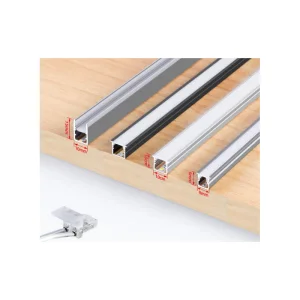
Complete your procurement specification with our field-tested linear lighting components.