Halo Light
Halo Light
Halo Light
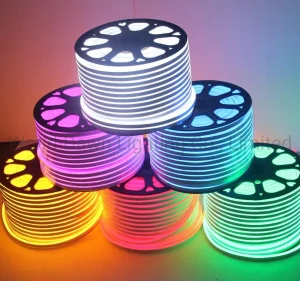
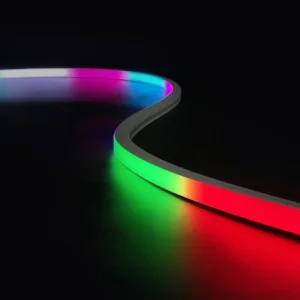
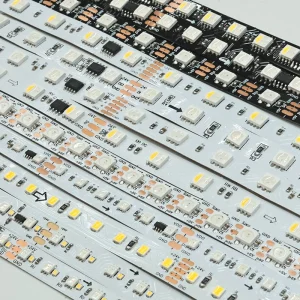
Explore our elite compilation of sub-compact, ultra-flexible, and resilient low-profile lighting components optimized for advanced industrial and commercial integrations.
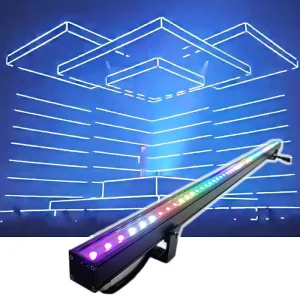
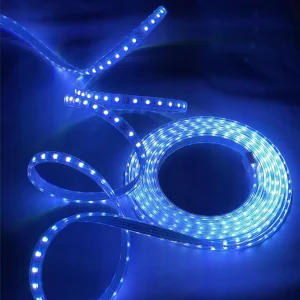
In modern architectural design, lighting has transcended its traditional role as a simple utility. Today, it is an integrated structural element. The global demand for low-profile LED strip lights is surging, driven by a paradigm shift toward architectural minimalism and spatial optimization. These ultra-thin, low-clearance systems enable lighting designers to conceal illuminants within geometric details that were previously impossible to access with legacy fixtures.
From micro-recessed millwork in corporate headquarters to sleek, aerodynamic contours in automotive interiors, low-profile linear illumination delivers high lumen density without the bulk. By minimizing the structural envelope needed for fixtures, commercial spaces save on materials, reduce overhead volumes, and unlock new creative potentials in hidden coves, under-cabinets, and spatial perimeter accents.
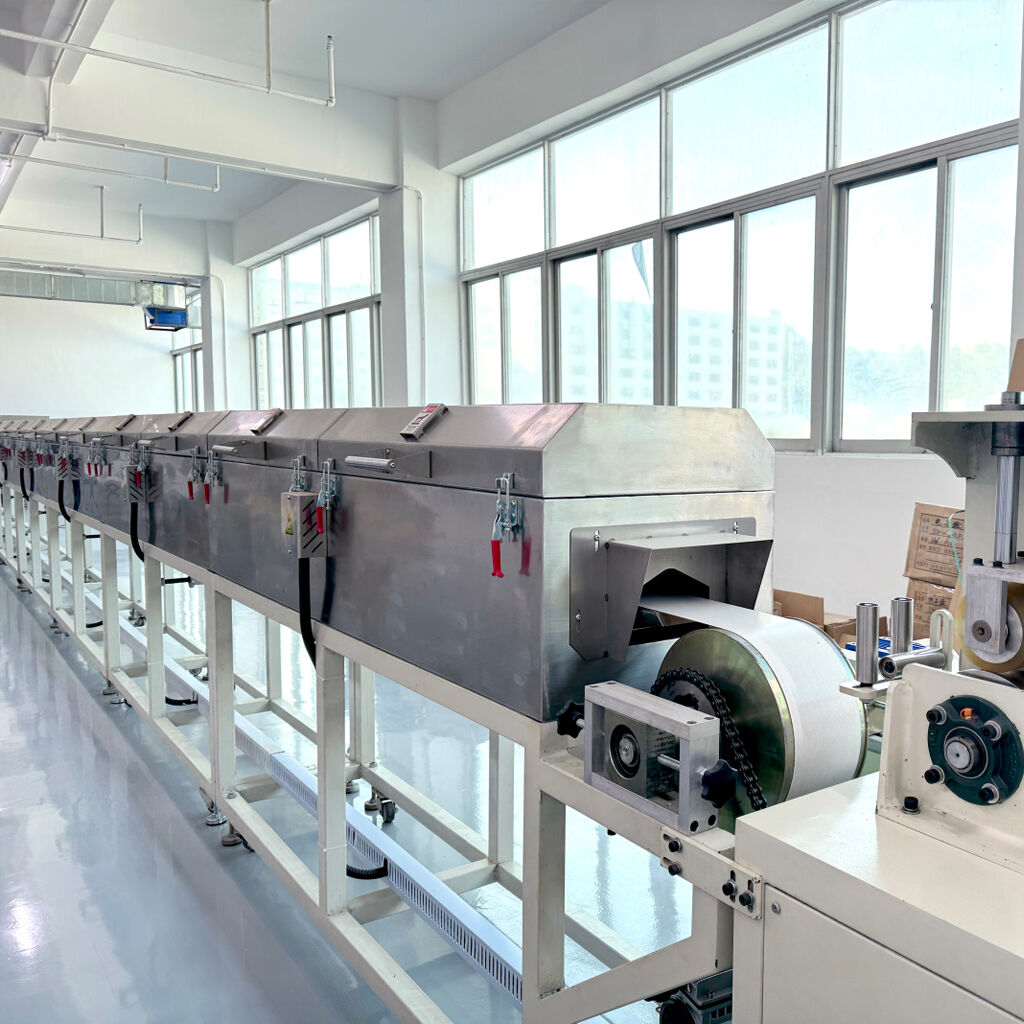
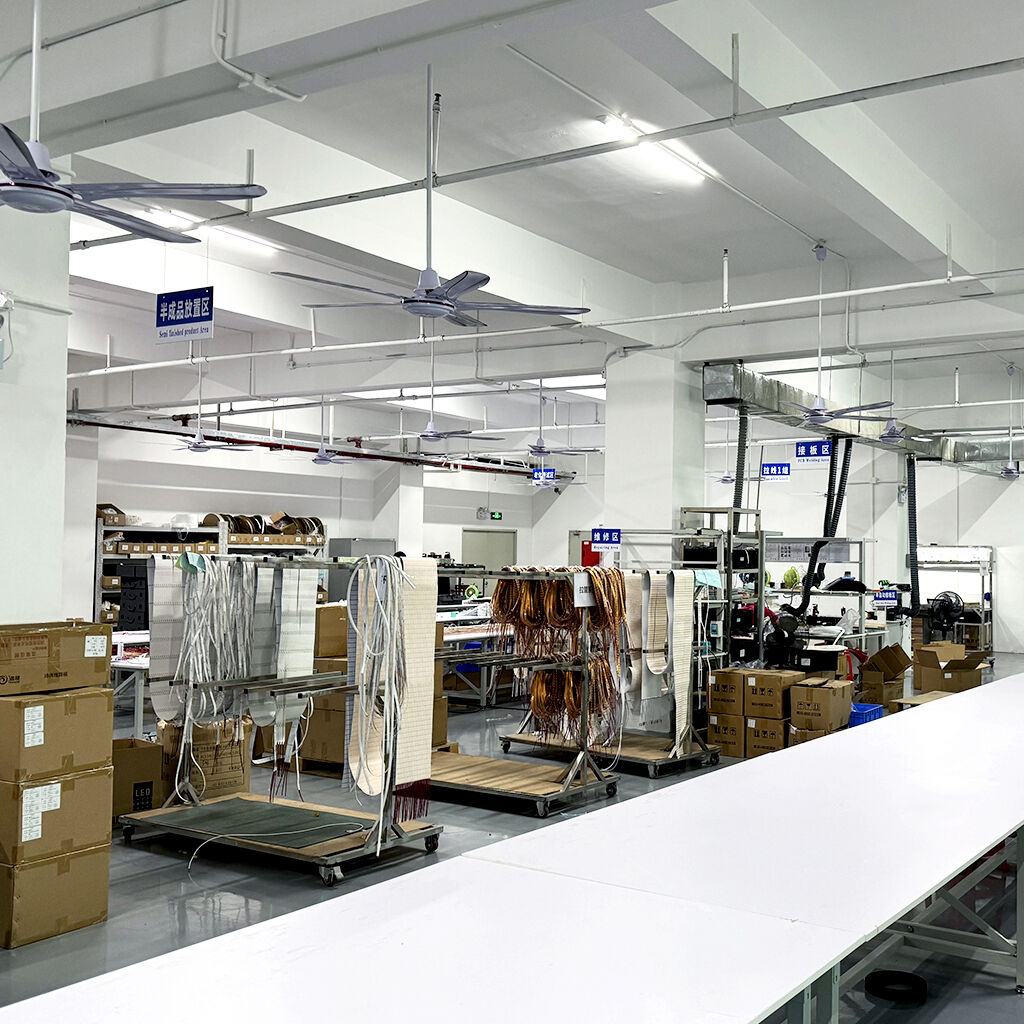
Hangzhou Halo Light Co., Ltd. has steadily evolved into a competitive LED strip light manufacturer, specializing in advanced Neon Flex, SMD, and COB LED lighting solutions for global markets. Since its establishment, the company has focused on combining innovation, quality manufacturing, and customer-oriented service to meet the growing demand for energy-efficient and flexible lighting systems.
Based in Hangzhou, a key center for technology and manufacturing in China, Halo Light operates a modern production facility equipped with automated assembly lines and strict quality control processes. Over the years, the company has built a professional team of engineers and technicians dedicated to continuous product development and performance optimization. Driven by global market trends and sustainable development goals, the company continues to enhance its manufacturing capabilities and expand its international presence, aiming to deliver reliable, efficient, and innovative LED lighting solutions worldwide.
An authoritative analysis of structural engineering differences, thermal pathways, and pixel densities in modern low-profile solid-state illumination.
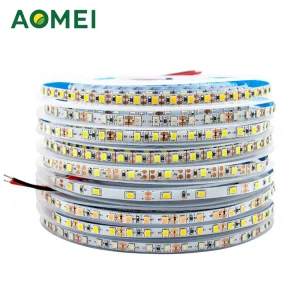
By eliminating individual surface mount packages, our COB technology deposits the semiconductor dies directly onto a flexible copper substrate layer. This achieves dot-free linear consistency even when paired with profiles as thin as 4mm, eliminating the need for thick diffusion lenses.
To counteract voltage drops inherent to long runs in thin cross-sections, Hangzhou Halo Light utilizes rolled-annealed 3oz copper tracks. This configuration minimizes electrical impedance and controls thermal expansion over prolonged operating cycles.
Our low-profile designs integrate thermally conductive polyimide backing tapes and sub-nanometer phosphor matrices. This system accelerates thermal dissipation from the junction to external aluminum sinks, preventing lumen degradation.
| Performance Parameter | High-Density COB Strips | Ultra-Fine SMD (2110 / 2216) | Standard Legacy SMD (5050) |
|---|---|---|---|
| Minimum Housing Depth Needed | ≥ 4.0 mm (Zero Hotspots) | ≥ 8.0 mm (Slight Pixelation) | ≥ 15.0 mm (Highly Segmented) |
| Thermal Conductivity Coefficient | 4.5 W/m·K | 3.2 W/m·K | 1.8 W/m·K |
| Bending Radius (Minimum) | 10 mm | 20 mm | 50 mm |
| Color Vector Consistency (SDCM) | < 2-Step MacAdam | < 3-Step MacAdam | < 5-Step MacAdam |
How specialized engineering groups adapt low-profile architectural lighting vectors across highly specific international environments and building configurations.
1. Architectural Micro-Millwork & Retail Display Networks (Europe & North America): High-end luxury retailers require completely invisible illumination frameworks. Our sub-compact linear tapes integrate into millwork channels without disrupting structural shelf compositions. Utilizing high color fidelity parameters (R9 > 80, Rf > 92), these systems elevate the presentation of merchandise without creating reflections on protective glass cases.
2. Humid Exterior Corridors & Marine Environments (Southeast Asia & MEA): High relative humidity and saline atmospheric compositions degrade standard PVC enclosures. Hangzhou Halo Light addresses this with solid silicone co-extrusion technology. This technique applies a molecularly cross-linked silicone barrier that blocks gas transmission, withstands extreme thermal shifts, and carries verified IP67/IP68 ingress ratings for harsh environments.
3. Smart Residential Intralogistics & IoT Protocols (Global Integration): With the expansion of interconnected automation networks, lighting systems must interface directly with localized control units. Our digital control variants support PWM, DALI-2, DMX512, and SPI addressing. This enables facilities to implement circadian tuning, predictive maintenance diagnostics, and reactive load balancing seamlessly.
Unlike conventional PVC sleeves that yellow, embrittle, and release corrosive chlorine gas under sustained UV exposure, our factory utilizes high-grade optical silicone polymers. The silicone fluid is cured via platinum catalysis to create a rugged cross-linked elastomer matrix. This matrix retains 98% light transmission efficiency across a wide temperature envelope (-50°C to +200°C) and acts as an advanced barrier against moisture and environmental ingress.
An authoritative analysis of upcoming technological transitions in solid-state lighting manufacturing over the next five years.
The roadmap for low-profile architectural lighting is centered on three core performance vectors: increasing luminous efficacy, integrating intelligent control nodes, and reducing environmental impact. Our research and development group is actively working to incorporate CSP (Chip Scale Package) matrix platforms. These arrays reduce fixture footprints by an additional 35% while pushing lumen output beyond 160 lm/W.
Sustainability criteria are also reshaping global supply chains. Hangzhou Halo Light is working to replace traditional lead-bearing solders with halogen-free alternatives and introduce circular economy supply chain tracking for copper elements. By minimizing parasitic power losses in structural circuits and designing for clean component recycling, we ensure our products comply with upcoming carbon tax regulations and strict eco-design directives in international markets.
Verified engineering answers addressing critical installation challenges, electrical considerations, and custom manufacturing capability questions.
We tackle thermal performance by utilizing multi-layered 3oz flexible copper substrates paired with high-grade thermal interface materials (TIM). This setup lowers junction-to-ambient thermal resistance. We also recommend mounting the strips within dedicated structural aluminum extrusions to maximize heat dissipation and maintain structural integrity.
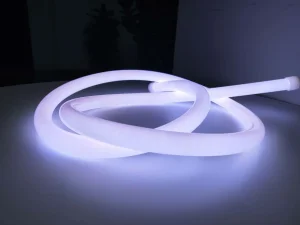
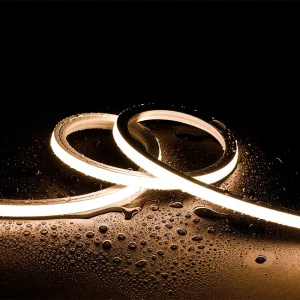
Yes, our low-profile neon flex solutions feature designated cut points at precise increments. For site adjustments, the cuts must be resealed using our specified neutral-cure architectural silicone adhesives along with custom-molded end caps. This process maintains the continuity of the IP67 ingress protection rating.
To manage voltage drops over long distances, we offer constant-current IC variants. These integrated circuits regulate the current across each individual LED segment, ensuring uniform brightness from the power feed to the tail end of the run. Alternatively, we configure dual-ended parallel power inputs for standard constant-voltage configurations.
Platinum-catalyzed silicone offers excellent UV stability and chemical resistance, preventing the yellowing and cracking common with PVC in outdoor environments. It also remains flexible across extreme temperature variations without off-gassing hazardous components, making it a highly reliable material for demanding project sites.
Yes, our complete product lineup is designed to interface smoothly with external control architectures. By combining our strips with compatible pulse-width modulation (PWM) dimming drivers, systems can achieve flicker-free dimming down to 0.1% via DALI-2, Lutron EcoSystem, 0-10V, or DMX512 controls.
Our factory provides extensive OEM/ODM customization services. Clients can specify custom PCB widths, targeted spectral power distributions (SPD), tailored lumen outputs, color rendering metrics, and bespoke connection leads to integrate perfectly with specialized architectural configurations.
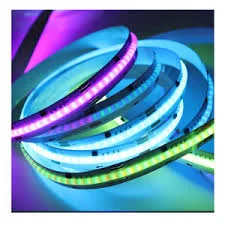
Review the remainder of our advanced catalog, highlighting dynamic pixel tape systems, dotless linear systems, and multi-channel intelligent luminaires.